
Web Design
Healthcare Website Design Best Practices for 2026
Healthcare website design is where patient trust is won or lost before a single appointment is booked. A patient searchi…
Read Article
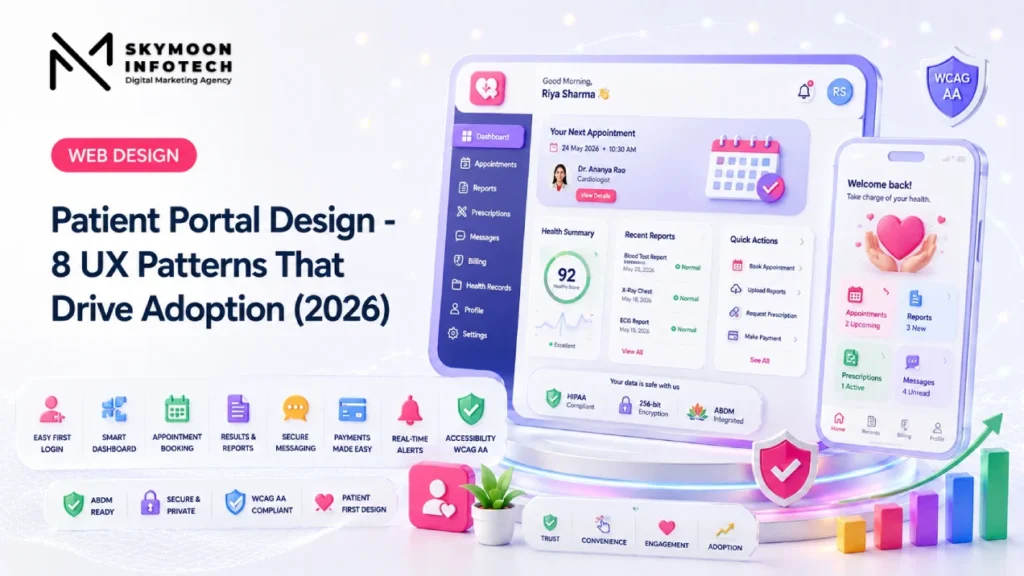
Patient portal design can determine whether patients become regular users or abandon the portal after registration. Among 250,345 adults with chronic conditions…
Read Article
Healthcare website design is where patient trust is won or lost before a single appointment is booked. A patient searchi…
Read Article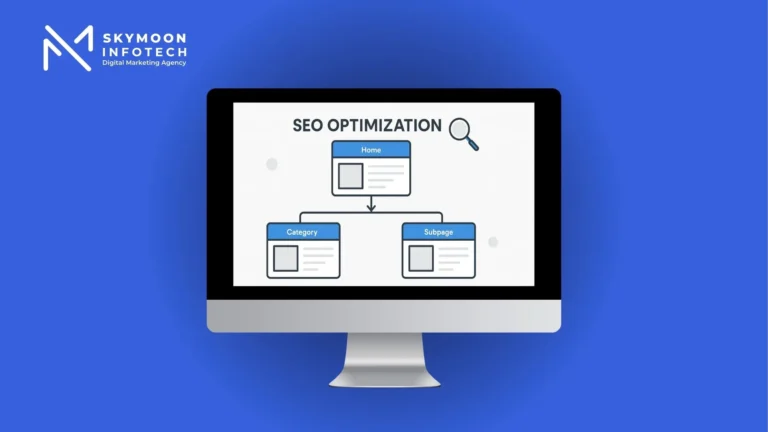
Website structure for SEO is the backbone of how search engines and users experience your website. A clear, logical stru…
Read Article
Why Business Website Design Matters In the digital-first era, your website is more than just a digital storefront it’s y…
Read Article
Introduction To stay ahead online, your website needs more than just good looks—it must be useful, easy to use, and read…
Read ArticleA website that looks dated, loads slowly, or confuses visitors on mobile is not just a design problem. It is a revenue problem. Our web design services treat design as a conversion tool, not a cosmetic layer every visual decision connects back to a measurable business outcome.
Web design is the process of planning, creating, and maintaining the visual and interactive elements of a website. It encompasses layout and information architecture, typography and colour systems, imagery and iconography, navigation structure, calls to action, and the overall user journey from the moment a visitor arrives to the moment they make an enquiry, purchase, or booking.
Design is not decoration. Every element on your website either helps a visitor understand your offer and take action, or it creates friction that pushes them toward the back button. The average user forms a first impression of your website in 50 milliseconds approximately 0.05 seconds. That impression is based almost entirely on visual design before a single word is read. Businesses that invest in professional web design consistently outperform those that treat it as a secondary concern after technical development.
User Interface (UI) design covers the visual and interactive elements of a website the buttons, typography, spacing, colour palette, icons, and layout that users see and interact with. User Experience (UX) design covers the overall journey a user takes through your website how easily they find information, how intuitively the navigation works, how clearly your value proposition is communicated, and how smoothly they move from arrival to conversion. Both are essential. Excellent UI with poor UX produces beautiful websites that do not convert. Excellent UX with poor UI produces functional websites that lack the credibility and visual quality that builds trust.
Effective web design in 2026 is built on a set of principles that have been validated by decades of user research and conversion data. These are not trends they are foundations.
Visual hierarchy is the arrangement of design elements in order of their importance to the user's journey. The most important element on any page typically the primary headline and call to action should be visually dominant, larger, and more prominently positioned than supporting elements. Users scan pages in predictable patterns, typically in an F or Z shape depending on content density. Designing with these patterns in mind ensures that the most critical information falls where eyes naturally travel first.
Mobile-first design means building the mobile version of your site first, then scaling up to tablet and desktop. It is the opposite of responsive design added as an afterthought to a desktop layout. With over 72% of web traffic coming from mobile devices in 2026, mobile-first is not an advanced practice it is the baseline requirement. Google's mobile-first indexing means it evaluates and ranks the mobile version of your site, not the desktop version. A site that delivers an excellent experience on desktop but a frustrating one on mobile is penalised in both rankings and conversions.
Whitespace also called negative space is the empty area between design elements. It is not wasted space. It is what makes content readable, elements distinguishable, and pages feel uncluttered and professional. The most common design mistake businesses make when reviewing their own website is wanting to add more information to every page. More information does not help users decide faster. Less, better-prioritised information does. Whitespace is what gives your most important content room to breathe and be absorbed.
Typography covers font choice, size, line height, letter spacing, and the relationship between heading levels and body text. A clear typographic hierarchy where H1 headings are visually distinct from H2 subheadings, which are distinct from body text helps users scan content quickly and find the sections most relevant to their needs. Limiting a website to two or three font families consistently produces cleaner, more professional results than mixing multiple typefaces across different sections.
Design trends matter because they influence how users perceive whether a business feels current and trustworthy. A website that looked modern in 2020 can actively undermine credibility in 2026 if it has not kept pace with how users have evolved their expectations through constant exposure to better-designed digital experiences.
Minimalist design removes everything that does not serve a clear purpose. In 2026, the strongest minimalist sites are not empty or bland they use bold typography, generous whitespace, strong brand colours, and high-quality imagery to create visual impact through restraint rather than through complexity. This approach loads faster, communicates more clearly, and converts better than design cluttered with competing elements. It is particularly effective for ecommerce category pages and professional service websites where clarity of offer is the primary conversion driver.
Landing pages have evolved significantly in 2026. The highest-converting landing pages share a consistent structure: a headline that directly matches the intent of the traffic source, a clear visual hierarchy that draws the eye toward the primary call to action, social proof including specific client outcomes rather than generic testimonials, and a single conversion goal without competing navigation links pulling attention away. Our web design team designs landing pages around a defined conversion goal from the first wireframe, not as a design exercise that adds a CTA at the end.
WCAG (Web Content Accessibility Guidelines) compliance ensures your website is usable by people with visual, motor, and cognitive disabilities. Beyond the ethical obligation, accessible websites rank better in organic search because the technical requirements of accessibility descriptive alt text, logical heading structure, sufficient colour contrast, keyboard navigability overlap significantly with SEO best practices. In 2026, accessibility is increasingly a legal requirement in markets including the US and EU, and Indian businesses serving international audiences should treat it as a baseline, not an enhancement.
The most important element on any business page is the call to action the button or form that triggers the conversion you want. Design your CTA first, then build the rest of the page to support it. It should be visually prominent, placed above the fold on desktop and mobile, use action-oriented language that specifies what happens next ("Get a Free Audit" rather than "Submit"), and appear in a contrasting colour that stands out from the rest of the page design. A well-designed CTA is the single highest-impact element on any conversion-focused page.
Generic stock photography is one of the most reliable signals that a business website lacks credibility. Users have developed a strong ability to recognise stock imagery and unconsciously discount the trustworthiness of the website when they see it. Real photography of your team, office, products, or clients builds trust in a way that even expensive stock photos cannot replicate. For businesses that cannot invest in professional photography immediately, illustrated graphics or high-quality abstract visuals are preferable to recognisable stock photos.
The paradox of choice applies directly to website navigation. More navigation options give visitors more ways to leave your conversion path. Research consistently shows that websites with seven or fewer primary navigation items achieve higher conversion rates than those with ten or more. Design your navigation around the three to five most business-critical pages the ones that directly lead to enquiries or purchases rather than providing a comprehensive map of every page on your site.
Browser-window previews and mobile emulators in design tools do not accurately represent how users experience your site on actual devices. Fonts render differently, touch targets feel different sizes, and loading behaviour varies significantly. Testing your design on a range of actual mobile devices particularly mid-range Android phones that represent the majority of Indian internet users before launch catches issues that would otherwise cost you conversions from your largest traffic segment.
Most website visitors do not read your content. They scan it, looking for the specific signal that tells them they are in the right place and should take action. Design your pages for scanning: use clear subheadings that communicate value independently of the body text beneath them, use bullet points to make key information digestible at a glance, bold the two or three most important phrases on each section, and keep paragraphs to three sentences or fewer. This applies to every page on your site, not just blog content. For service and landing pages, the combination of scannable design and a well-positioned CTA is the highest-leverage design investment available. Our web design and CRO services treat these two disciplines as inseparable.
At Skymoon Infotech, our web design services start with your business objective and target audience before a single pixel is placed. We do not design websites that look good in a portfolio presentation but underperform in production. Every design decision from heading hierarchy to CTA placement to colour contrast is made in the context of how it will affect the behaviour of your specific audience on their specific devices.
We design with Core Web Vitals in mind from the first wireframe, because a design that requires heavy scripts or large unoptimised images creates technical debt that costs rankings and conversions once the site goes live. Our design and development teams work together rather than sequentially, which means every design is validated for technical feasibility and performance before it reaches the build stage.
Web design is the process of planning and creating the visual and interactive elements of a website. It includes layout and information architecture, typography, colour systems, imagery, navigation structure, calls to action, and the overall user journey from arrival to conversion. Effective web design combines aesthetic judgement with user psychology and business strategy to create websites that look credible, communicate clearly, and convert visitors into customers or enquiries.
UI (User Interface) design covers the visual and interactive elements users see — buttons, typography, colours, spacing, and layout. UX (User Experience) design covers the overall journey users take through a website — how easily they find information, how clearly the value proposition is communicated, and how smoothly they move from arrival to conversion. Both are required for a website that performs commercially. Excellent UI without UX produces visually impressive sites that confuse users. Excellent UX without UI produces functional sites that lack credibility.
Web design costs in India vary based on complexity, scope, and the expertise of the agency or freelancer. A basic five-page business website design ranges from Rs. 15,000 to Rs. 50,000. A comprehensive website with custom UI design, multiple service pages, landing pages, and mobile optimisation typically ranges from Rs. 50,000 to Rs. 2,00,000. Ecommerce store design with product and category page templates ranges from Rs. 75,000 upward depending on the number of templates required. Design cost should always be evaluated alongside the expected conversion improvement it will deliver.
Mobile-first web design means designing the mobile version of a website before the desktop version, then scaling up. It matters because over 72% of web traffic in 2026 comes from mobile devices, and Google uses mobile-first indexing — meaning it ranks and evaluates the mobile version of your site. A site designed mobile-first is structurally leaner, loads faster on mobile networks, and scores better on Core Web Vitals because it was never burdened with desktop-only complexity added as an afterthought.
The most commercially significant web design trends for 2026 are minimalist design with bold typography and strong whitespace, conversion-focused landing page architecture with single clear calls to action, accessibility compliance as a baseline requirement, performance-first design that does not sacrifice Core Web Vitals for visual complexity, and AI-assisted design tools that accelerate iteration without replacing human strategic and creative direction. Trends that look impressive in design portfolios but hurt performance or conversion rates are worth avoiding regardless of their aesthetic appeal.
A standard business website design project with five to ten pages takes three to five weeks from initial briefing to approved final designs, including discovery, wireframing, visual design, and revision cycles. A comprehensive ecommerce store with custom product and category page templates takes five to eight weeks. Timeline extensions are almost always caused by delayed feedback, scope changes mid-project, or content not being ready when design requires it. Having a clear brief and content structure prepared before design begins is the most effective way to keep a project on schedule.
A redesign is appropriate when your existing website has a solid technical foundation, established SEO rankings you want to preserve, and specific visual or UX issues that are limiting conversion rate. A new build is appropriate when the existing site has deep technical problems, is built on a platform you are migrating away from, or has structural issues that a surface-level redesign cannot fix. In either case, the decision should be based on an audit of current performance data rather than aesthetic preference. Our web design team conducts a full audit before recommending a redesign or new build approach for every client engagement.