SEO
Google Business Profile for Doctors and Clinics – Setup Guide
Most advice on Google Business Profile for doctors starts with photos and posts. Google’s guidelines start earlier…
Read Article
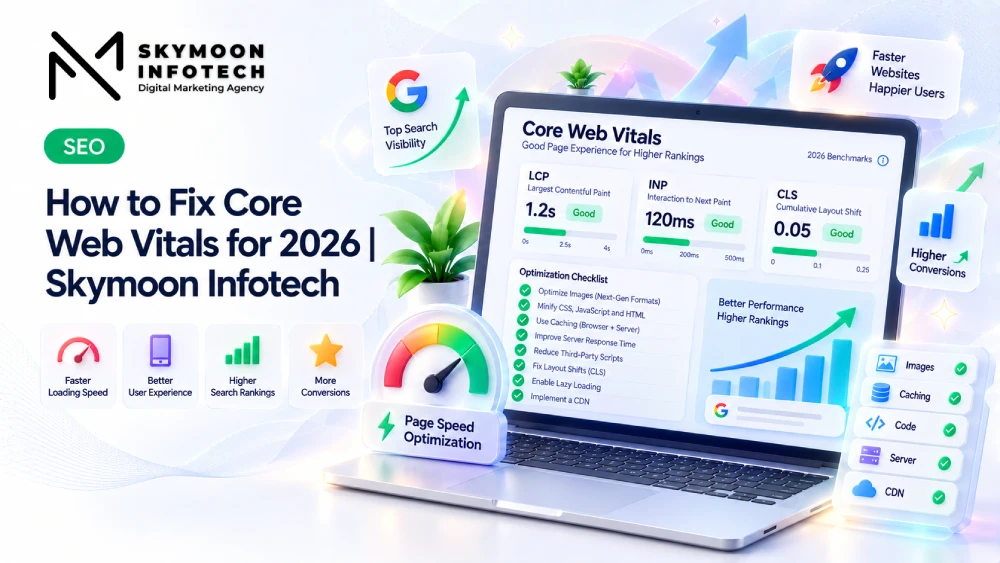
Core Web Vitals measure how quickly your main content appears, how responsive it feels and how stable the layout stays. The current metrics are Largest Contentf…
Read Article
Most advice on Google Business Profile for doctors starts with photos and posts. Google’s guidelines start earlier…
Read Article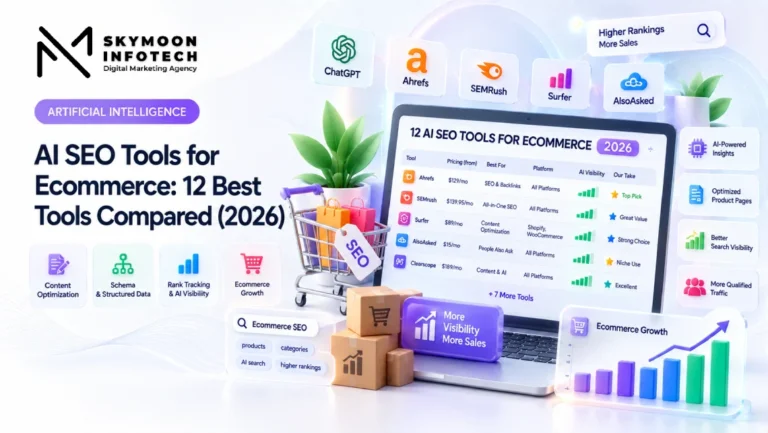
AI SEO tools cover a broad category. This post narrows to one specific problem: ecommerce catalogues with hundreds or th…
Read Article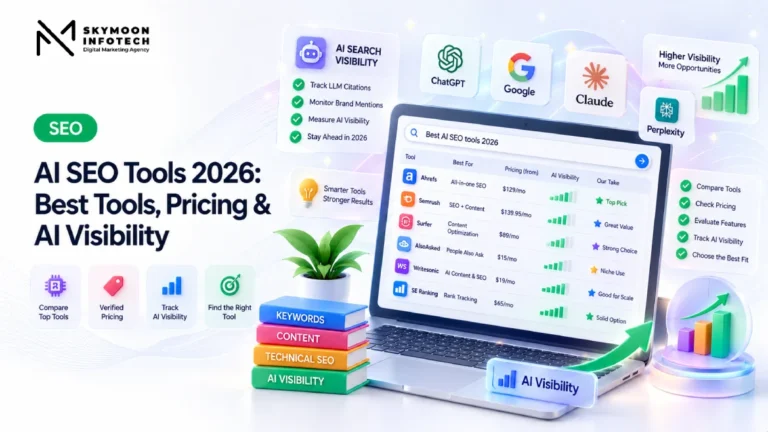
Most AI SEO tool comparison lists have a structural problem: they cover content optimization and AI visibility tracking …
Read Article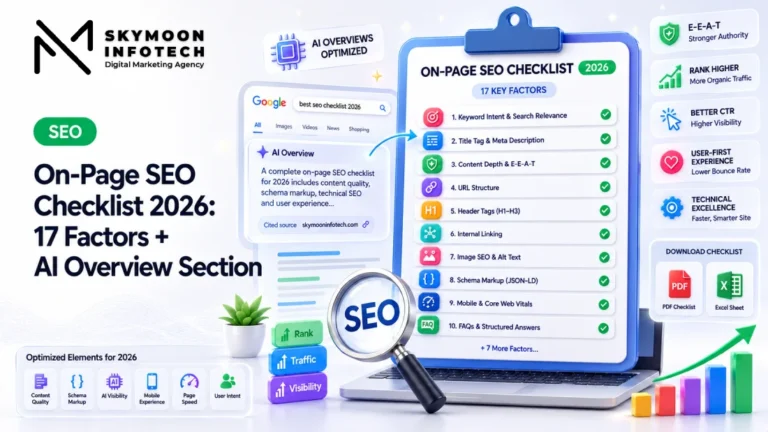
DOWNLOAD Get the on-page SEO checklist PDF and on-page SEO checklist Excel version below to work through every item…
Read Article
Healthcare SEO keywords are not a list you download and distribute to a content team. For a hospital network with 20 dep…
Read Article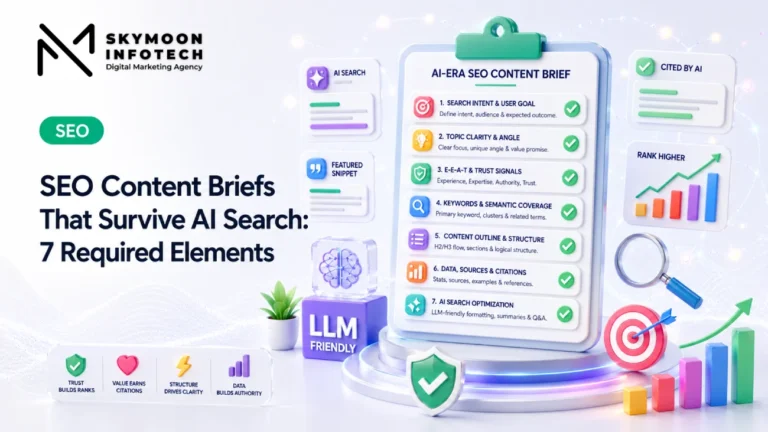
A standard seo content brief (keyword, intent, word count, heading skeleton, competitor references) produces content tha…
Read ArticleIf your business is not appearing on the first page of Google for the terms your customers search, you are leaving that traffic to your competitors. This guide covers everything from the basics of how SEO works to the specific tactics that move rankings in 2026.
Search engine optimisation is the practice of improving your website so it appears higher in Google and other search engine results when people search for topics relevant to your business. According to Google's own documentation, SEO is about helping search engines understand your content and helping users find your site and make a decision about whether they should visit it through a search result.
When someone searches a query on Google, an automated algorithm evaluates every relevant page on the internet and ranks them in order of quality, relevance, and trustworthiness. Your goal is to make your pages score highly across every dimension that algorithm measures. The higher your page ranks, the more organic traffic you attract without paying for every click.
In 2026, SEO also determines how your content appears in AI-generated search features. Google's AI Overviews, Perplexity's citations, and responses from AI assistants like ChatGPT and Gemini all pull information from ranked, authoritative web pages. Strong SEO now builds visibility across both traditional search and AI platforms simultaneously.
Paid advertising produces immediate visibility but costs money every time someone clicks, and the traffic stops the moment you stop paying. Organic SEO takes longer to build but produces durable, compounding traffic that does not require ongoing spend per visitor. A page that earns a first-page ranking continues receiving traffic for months or years without additional cost. For most businesses, the long-term return on investment from SEO significantly exceeds the return from paid advertising at equivalent spend levels.
SORA IMAGE PROMPT: A clean, modern digital illustration showing a Google search results page with the number one organic result highlighted, an upward trending ranking graph, and an SEO optimisation workflow diagram. Dark background with blue accent colours. No text in the image. Wide 16:9 format.
Every SEO strategy rests on three interconnected pillars. Weakness in any one of them limits the potential of the others.
On-page SEO covers everything you control directly on your website. This includes your content quality and depth, keyword placement, title tags, meta descriptions, heading structure, internal linking, image alt text, and URL structure. The goal of on-page optimisation is to make each page clearly communicate its topic to both search engines and users.
Keyword-rich URLs achieve a 45% higher click-through rate than generic URLs, according to Backlinko research. Title tags with 40 to 60 characters achieve the highest CTR in organic results. And the first organic result captures approximately 28% of all clicks for a query, making first-page placement the primary objective of every on-page effort.
Technical SEO covers the behind-the-scenes elements that allow search engines to crawl, index, and understand your website correctly. This includes page speed and Core Web Vitals, mobile responsiveness, HTTPS security, clean URL structure, XML sitemaps, schema markup, and fixing crawl errors. Without solid technical SEO, even the best content struggles to rank because search engines cannot access or interpret your pages properly.
As of late 2025, only 54.6% of websites meet Google's Core Web Vitals thresholds. This means nearly half of all websites have a technical performance issue that is actively suppressing their rankings. For businesses in India competing for search visibility, fixing technical foundations is often the fastest path to ranking improvements.
Off-page SEO refers to signals that exist outside your website, primarily backlinks from other authoritative websites pointing to yours. These act as votes of confidence that tell search engines your content is trustworthy and valuable. The quality of links matters far more than quantity. A single link from an authoritative industry publication carries more ranking weight than dozens of low-quality directory submissions.
Beyond links, off-page SEO in 2026 also encompasses your presence in AI systems, mentions in industry publications, and authority signals across platforms like LinkedIn and YouTube. You can read more about the full scope of off-page strategies in our detailed SEO service guide.
SORA IMAGE PROMPT: A flat-style illustration showing three interconnected circles labelled On-Page, Technical, and Off-Page SEO with icons representing content, code, and links respectively. Blue and dark colour palette. No text in the image. Clean minimal design. Wide 16:9 format.
The SEO landscape has changed more in the last two years than in the previous decade. Over 92% of marketers now align their strategy with both traditional and AI-supported search engines, recognising that visibility in Google is no longer the only channel that matters.
Google's AI Overviews now appear for a significant and growing share of queries, and when they do, organic click-through rates drop from 15% to approximately 8%. Zero-click searches, where users get their answer directly from the SERP without visiting any website, have crossed 58% in the United States. This does not make SEO less valuable. It makes the quality of your SERP appearance more important than ever, because only authoritative, well-structured content gets cited in AI features.
Google's algorithm has become highly sophisticated at identifying the intent behind a search query, not just the words used. The four types of search intent are informational (seeking to learn something), navigational (seeking a specific website), commercial investigation (comparing options before a decision), and transactional (ready to act). Matching your page format and content depth to the dominant intent behind a keyword is now more important than keyword density or word count alone.
Google's quality guidelines emphasise Experience, Expertise, Authoritativeness, and Trustworthiness across every page it evaluates. In the era of AI-generated content flooding the web, Google has sharpened its ability to detect content that demonstrates real-world experience versus content that simply aggregates existing information. Pages that show first-hand expertise, cite original data, include named authors with verifiable credentials, and update content regularly consistently outperform those that do not.
These are the tactics that consistently deliver ranking improvements across industries, verified through Skymoon's client work and current best-practice research.
No amount of content or link building will overcome a website that Google cannot crawl efficiently. Before investing in new content, audit your technical SEO. Check for crawl errors in Google Search Console, verify your Core Web Vitals scores, ensure your XML sitemap is submitted and error-free, and confirm that all key pages are indexed. Pages that fail Core Web Vitals thresholds rank below equivalent pages that pass, all other factors being equal.
Topic clusters are replacing single-keyword targeting as the dominant SEO structure in 2026. A topic cluster consists of one comprehensive pillar page covering a broad topic, supported by multiple in-depth cluster pages covering specific subtopics, all interlinked. This structure signals topical authority to Google, increases the number of keywords your domain ranks for, and keeps users on your site longer through natural navigation between related content.
A transactional keyword like "hire SEO company India" should be answered with a service page that drives contact conversions, not a blog post. An informational keyword like "what is technical SEO" should be answered with a comprehensive educational article, not a service page. Mismatching your content format to the intent behind a keyword is one of the most common reasons pages fail to rank despite being well-written and technically sound.
Your website structure tells search engines which pages are most important and how content is related. A flat site structure, where most pages are reachable within three clicks from the homepage, allows crawl budget to flow efficiently to all key pages. Clear URL hierarchies, logical internal linking, and consistent navigation reduce crawl waste and ensure that your most valuable pages receive the most link equity from your own site.
Featured snippets appear at the top of the SERP above all organic results, including position one. They are typically awarded to pages that provide a clear, concise answer to a specific question within their content. To target featured snippets, identify question-based queries in your niche, structure your answers in 40 to 60 word paragraphs directly below a subheading that matches the question, and use structured markup where applicable.
Backlinks remain one of the strongest ranking signals in 2026. The most effective link-building approach is creating content worth linking to, including original research, comprehensive guides, industry data, and expert commentary that other sites reference naturally. According to industry data, companies with active blogs earn 97% more inbound links than those without regular content. Guest posting on relevant publications and digital PR campaigns that generate press coverage are the most scalable link acquisition methods.
AI Overviews and AI search tools like Perplexity select content to cite based on clarity of structure, authority signals, and the presence of direct, extractable answers. To appear in AI-generated summaries, write clear definitions at the start of each major section, use schema markup including FAQ, Article, and HowTo schemas, include original statistics with cited sources, and ensure named authors with verifiable credentials are associated with your content. The brands appearing in AI answers in 2026 are not the ones chasing keywords. They are the ones publishing proprietary data and content designed to be cited. Our SEO services team applies all of these approaches to every client campaign.
At Skymoon Infotech, our SEO services are built around measurable business outcomes rather than vanity metrics. We do not report keyword rankings as success in isolation. We connect SEO work to leads generated, revenue attributed, and cost per acquisition reduced over time.
Our process begins with a full technical audit to identify and fix the foundation issues that suppress rankings regardless of content quality. We then build topic cluster strategies aligned to how your customers actually search, produce content that satisfies both Google and AI search systems, and pursue link acquisition through methods that build lasting authority rather than short-term gains.
We have delivered SEO campaigns for businesses across India in industries including ecommerce, professional services, SaaS, education, and healthcare, consistently moving pages from positions 20 to 50 onto the first page within six to twelve months of consistent work.
SEO stands for search engine optimisation. It is the practice of improving your website so it appears higher in Google and other search engine results when people search for topics related to your business. It matters because organic search drives 53% of all trackable website traffic, more than paid search and social media combined. A first-page ranking continues delivering traffic for months or years without ongoing cost per click, making SEO the highest long-term ROI channel in digital marketing.
Most businesses see measurable improvements in organic traffic within three to six months of consistent SEO work for mid-competition keywords. Highly competitive industries and brand new websites may take nine to twelve months for first-page rankings. The key distinction is that SEO results compound over time. A page that ranks well today continues generating traffic for years without additional spend, which is why long-term return on investment from SEO consistently exceeds paid advertising at equivalent investment levels.
On-page SEO refers to everything you control directly on your website, including content quality, keyword placement, title tags, meta descriptions, heading structure, internal links, and page speed. Off-page SEO refers to signals that exist outside your website, primarily backlinks from other authoritative sites pointing to yours. Both are required for strong rankings. On-page SEO tells search engines what your page is about. Off-page SEO tells them how trustworthy and authoritative your site is compared to competitors covering the same topic.
Technical SEO covers the behind-the-scenes elements that allow search engines to crawl, index, and understand your website correctly. This includes page speed and Core Web Vitals, mobile responsiveness, HTTPS security, clean URL structure, XML sitemaps, structured data, and fixing crawl errors. Without solid technical SEO, even the best content struggles to rank because search engines cannot access or interpret your pages properly. It is the foundation that all other SEO work is built on.
Site structure refers to how your pages are organised and linked to each other. A clear, logical structure helps search engines understand which pages are most important, how content is related, and how to allocate crawl budget across your website. A flat structure where all key pages are reachable within three clicks from the homepage allows link equity to flow efficiently and ensures your most valuable content gets indexed and ranked. Poor site structure is one of the most common causes of ranking stagnation for established websites.
Yes, and arguably more so. While AI Overviews and tools like ChatGPT are changing how some queries are answered, they pull from authoritative, well-structured web pages to generate those answers. A strong SEO foundation is now the prerequisite for both traditional rankings and AI citation. Pages that rank well on Google are significantly more likely to be cited in AI-generated answers. Investing in SEO builds visibility across both channels simultaneously, making it one of the most compounding digital investments a business can make.
SEO pricing in India varies based on scope, competition, and the expertise of the agency or professional. Freelancers typically charge between Rs. 5,000 and Rs. 25,000 per month for basic on-page work. Professional agencies range from Rs. 20,000 to Rs. 1,50,000 or more per month depending on deliverables, link building activity, and content production. For most small to medium businesses, a structured agency engagement between Rs. 30,000 and Rs. 80,000 per month delivers a strong combination of technical, content, and off-page SEO that produces measurable results within six months.