
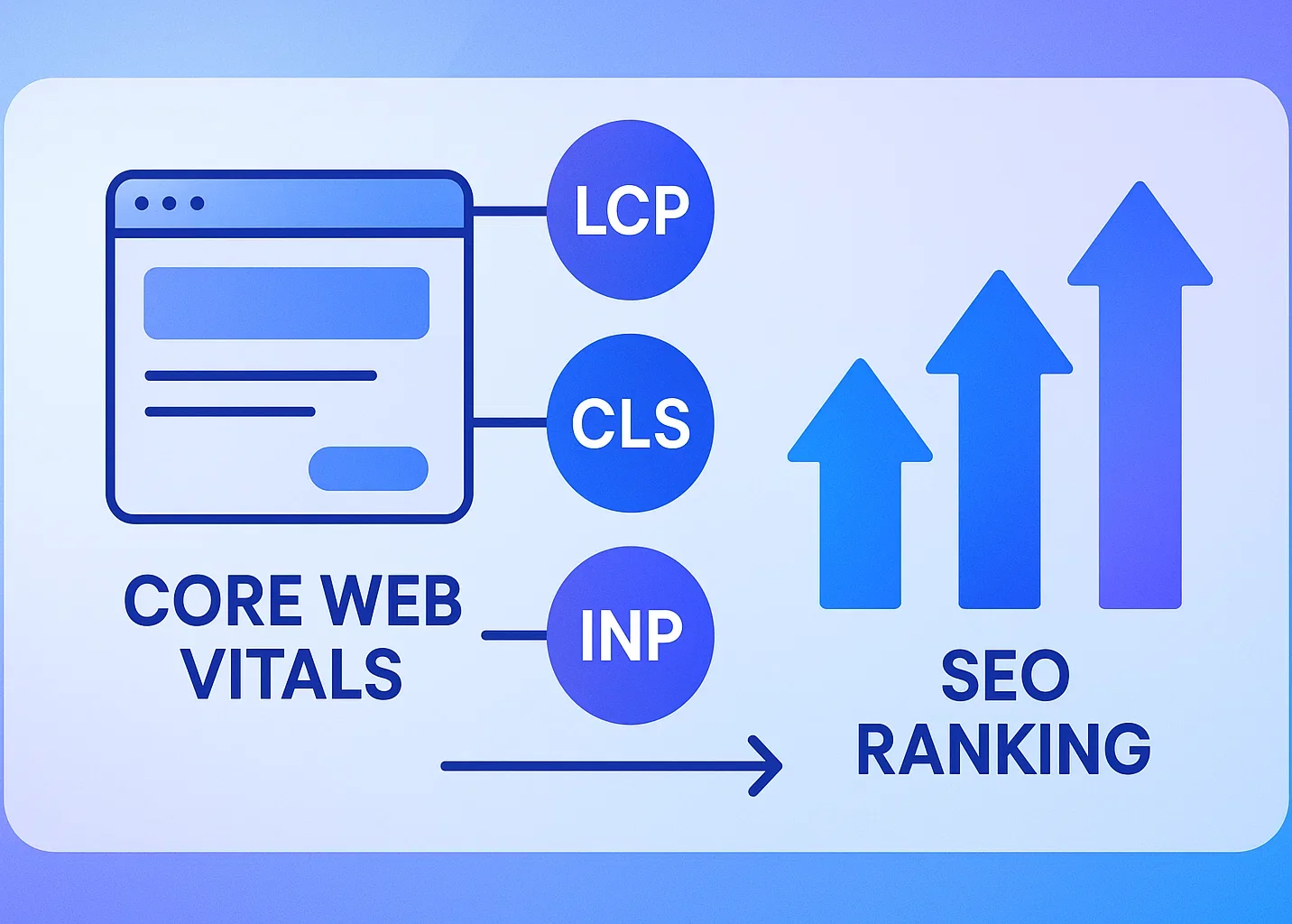
Core Web Vitals 2026 are at the center of Google’s Page Experience 2026 update, reshaping how websites are ranked in search results. The biggest change this year is the arrival of Interaction to Next Paint (INP), which officially replaces First Input Delay (FID) as the responsiveness metric. Alongside Largest Contentful Paint (LCP) and Cumulative Layout Shift (CLS), INP now defines how fast, stable, and interactive your website feels to users.
For businesses and marketers, the Core Web Vitals update 2026 isn’t just a technical change—it directly affects SEO ranking, conversions, and customer experience. Failing to meet thresholds means slower load times, unstable layouts, and ultimately, lower visibility on Google.
The SEO checklist that finds what is actually holding you back
Twenty seven checks covering technical SEO, on page structure, and link strategy. The same list our team runs before quoting any new client.
In this blog, we’ll explain what Core Web Vitals are in 2026, why they matter, and how to optimize them using a Core Web Vitals checklist 2026. You’ll also learn about testing tools, mobile vs desktop differences, and when to consider professional Core Web Vitals optimization services.
What Are Core Web Vitals 2026?
Core Web Vitals 2026 are a set of standardized performance metrics created by Google to measure real-world user experience on websites. They focus on three areas: how quickly the page loads, how stable the layout is, and how responsive interactions feel.
- Largest Contentful Paint (LCP): Measures loading performance. In 2026, Google expects LCP to happen within 2.5 seconds or faster according to the official Core Web Vitals guidelines.
- Cumulative Layout Shift (CLS): Measures visual stability. A CLS score under 0.1 is required. Tools like PageSpeed Insights can reveal if your site meets this threshold.
- Interaction to Next Paint (INP): Measures responsiveness. INP should remain below 200ms for a good score, as noted in the Search Central documentation.
The replacement of FID with INP reflects Google’s shift toward measuring full interaction experience, not just the first click. This means every button, scroll, or tap matters.
As user expectations for fast, smooth experiences continue to rise, these metrics have become directly tied to your visibility and competitiveness in search. Businesses investing in SEO services in India already see better performance when aligning with these guidelines.
Why the Core Web Vitals Update 2026 Matters for SEO
Google has repeatedly emphasized that page experience is a ranking factor, and the Core Web Vitals update 2026 makes this clearer than ever. Websites that pass the required thresholds for LCP, CLS, and INP are more likely to achieve higher visibility on search engine results pages (SERPs).
A slow or unstable website frustrates users, leading to higher bounce rates and lower engagement. According to HubSpot’s web performance study, even a one-second delay in load time can reduce conversions by up to 7%. On the other hand, a site that delivers a smooth experience not only satisfies visitors but also aligns with Google’s Page Experience 2026 signals.
For businesses, this means Core Web Vitals directly influence both traffic and revenue. Improving them should be considered part of your overall SEO strategy, not a separate task.
Core Web Vitals Metrics Explained
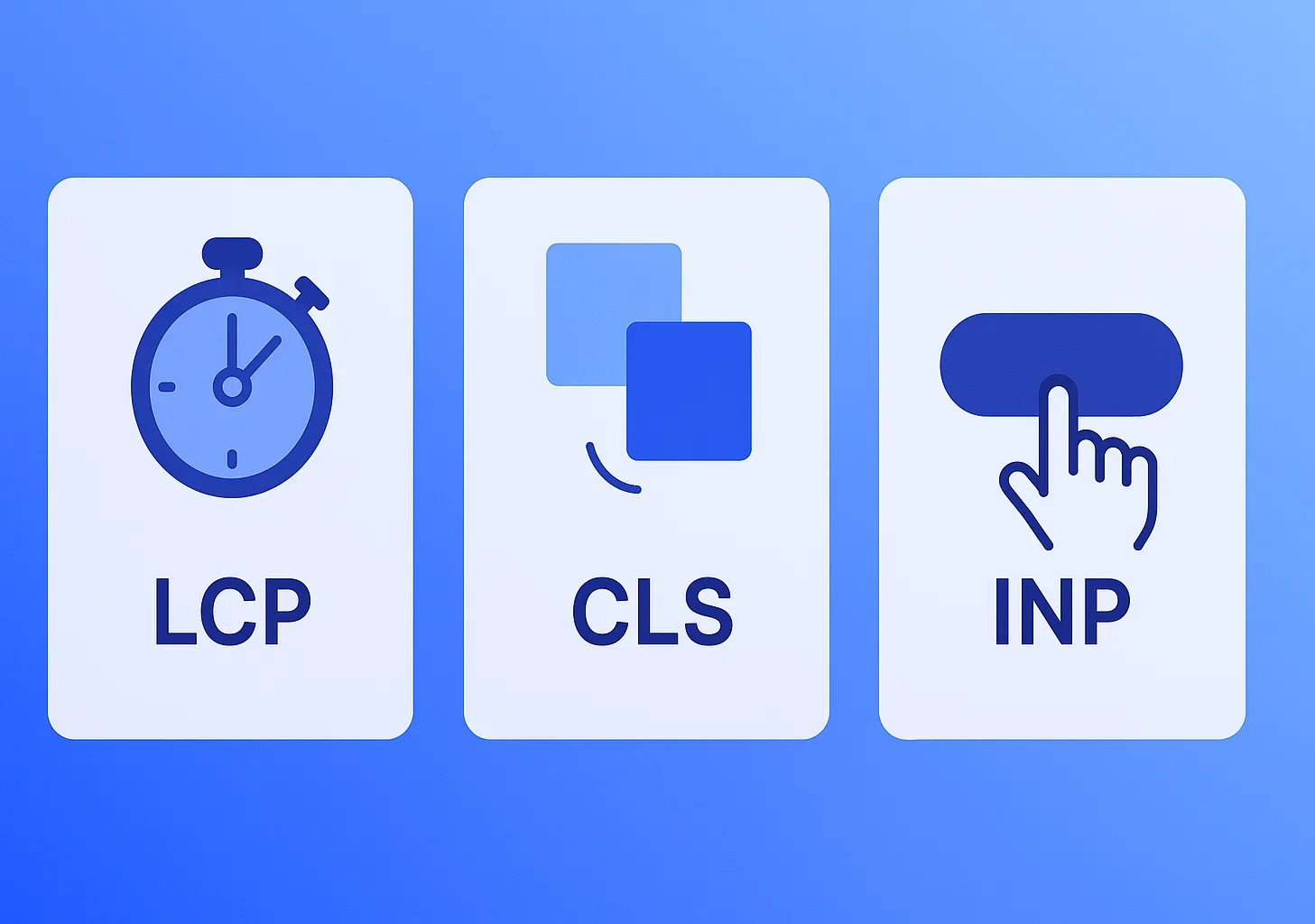
Google’s Core Web Vitals guidelines focus on three key areas of performance: loading, visual stability, and interactivity. In 2026, these are represented by Largest Contentful Paint (LCP), Cumulative Layout Shift (CLS), and Interaction to Next Paint (INP). Each metric has its own thresholds and optimization strategies.
Largest Contentful Paint Threshold
Largest Contentful Paint (LCP) measures how quickly the main content of a webpage becomes visible to users. Google’s 2026 threshold requires LCP to occur within 2.5 seconds for a good score. Anything above four seconds is considered poor.
Optimizing LCP involves reducing server response times, compressing and serving images in next-gen formats, and using a content delivery network (CDN). You can check your site’s LCP performance using PageSpeed Insights or Google Search Console’s Core Web Vitals report.
For businesses running online stores, fast-loading product pages can directly impact conversions. Our eCommerce SEO services often prioritize LCP improvements to boost engagement and sales.
Cumulative Layout Shift Fix
Cumulative Layout Shift (CLS) measures how stable a webpage is as it loads. If images, buttons, or text suddenly jump around, users have a poor experience. Google defines a good CLS score as under 0.1, while anything above 0.25 is poor.
Common causes include images without dimensions, ads loading dynamically, or font swaps. To fix CLS, always define image dimensions, reserve ad space, and use font-display: swap in CSS.
A detailed breakdown is available on web.dev’s CLS documentation. Businesses targeting global audiences must pay special attention to CLS, as layout instability can cause users to abandon checkout flows. Our web design services focus on ensuring pixel-perfect stability across devices.
Core Web Vitals INP (Interaction to Next Paint)
The most significant Core Web Vitals update 2026 is the replacement of First Input Delay (FID) with Interaction to Next Paint (INP). INP measures the time it takes for a website to respond after a user interacts (like clicking a button or typing in a form).
Google defines a good INP score as below 200ms, while over 500ms is considered poor. This makes INP a more holistic measure of real-world interactivity compared to FID.
Improving INP requires reducing JavaScript execution time, minimizing long tasks, and deferring non-essential scripts. According to SEMrush’s Core Web Vitals research, sites that optimize for INP often see higher user satisfaction scores.
For complex websites such as enterprise portals or healthcare platforms, we recommend professional audits through Core Web Vitals optimization services to ensure responsiveness remains within thresholds.
Core Web Vitals Checklist 2026
Passing Core Web Vitals in 2026 requires meeting all three thresholds—LCP, CLS, and INP—across both mobile and desktop. Here’s a practical checklist you can follow:
- Largest Contentful Paint (LCP): Ensure pages load the main content in under 2.5 seconds. Use PageSpeed Insights to verify performance.
- Cumulative Layout Shift (CLS): Keep layout shifts under 0.1 by assigning fixed dimensions to images, videos, and ads. Refer to Google Web.dev CLS guide for best practices.
- Interaction to Next Paint (INP): Maintain responsiveness below 200ms. Audit long-running JavaScript tasks using Lighthouse.
- Mobile vs Desktop: Test both experiences. Mobile users face higher network variability, making optimizations like responsive images and critical CSS essential. Our web development services often prioritize mobile-first Core Web Vitals.
- Ongoing Monitoring: Track performance through the Core Web Vitals report in Search Console. Continuous monitoring is key since performance can vary by device, geography, and user behavior.
- Holistic SEO Alignment: Core Web Vitals should be part of a broader SEO checklist to ensure long-term ranking improvements.
With this checklist in hand, the next step is learning how to test these metrics accurately. Let’s look at the best tools available in 2026.
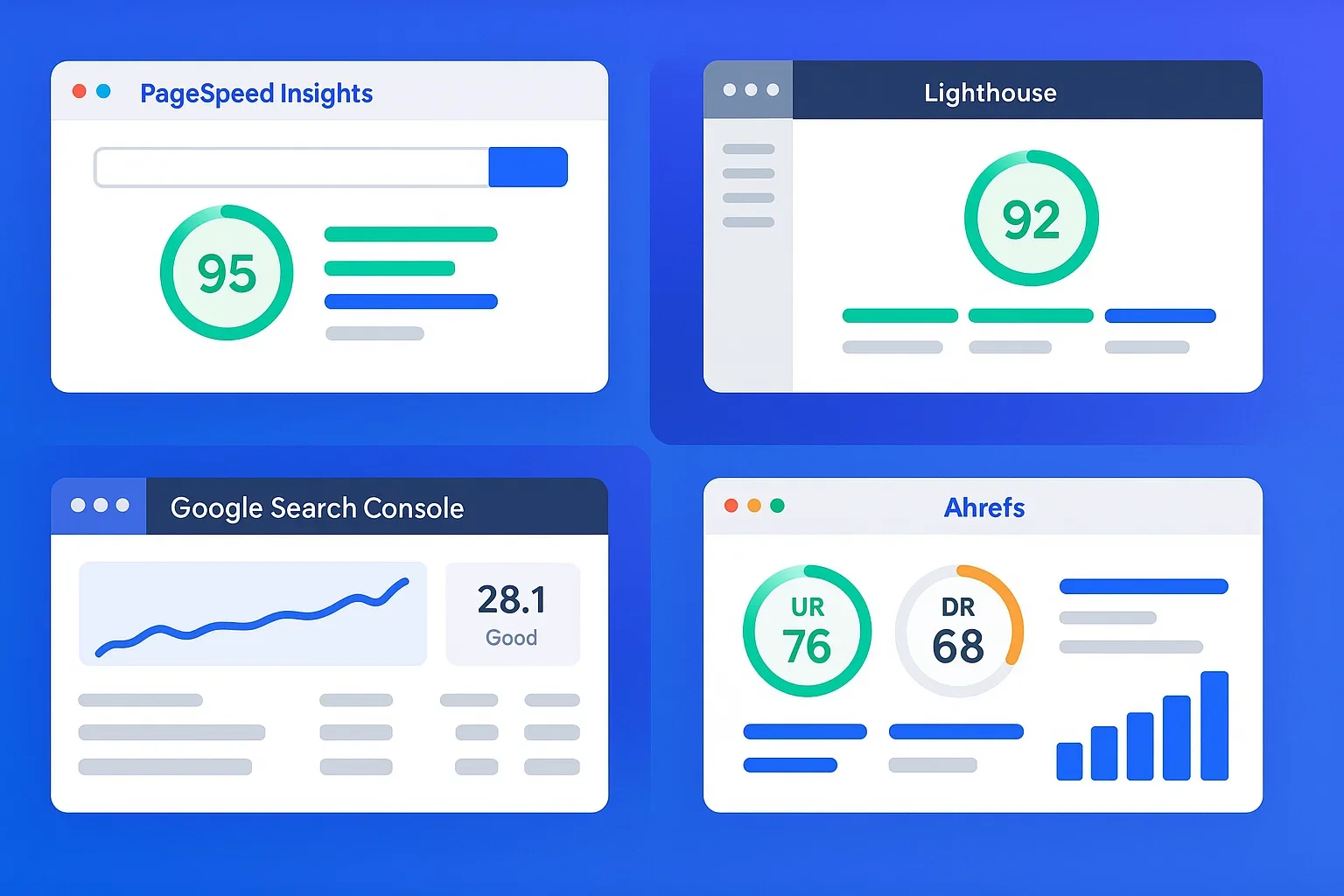
How to Test Core Web Vitals
To ensure your site meets the updated thresholds, it’s critical to test performance regularly. In 2026, several tools make this process easier—each with its own advantages.
PageSpeed Insights
PageSpeed Insights is the most popular free tool for measuring Core Web Vitals. It uses both lab data (simulated tests) and field data (real Chrome User Experience Report). This dual view helps you understand both controlled performance and real-world user experience.
Your competitors might be outranking you for a fixable reason
Most sites lose the majority of their potential traffic to issues that take days, not months, to fix. Our free audit tells you what those are.
No commitment, just a clear picture of where you stand.
It highlights Largest Contentful Paint thresholds, Cumulative Layout Shift fixes, and Interaction to Next Paint delays. For business owners, PageSpeed Insights provides actionable suggestions like image compression, script deferral, and caching improvements.
We often recommend this tool during website audit services to identify quick wins.
Lighthouse
Lighthouse is a developer-focused tool available in Chrome DevTools. Unlike PageSpeed Insights, it only provides lab data but gives deeper technical insights.
It can help diagnose problems causing poor INP scores, such as long JavaScript tasks, unoptimized fonts, or layout thrashing. Lighthouse also integrates with CI/CD pipelines, making it ideal for development teams who want automated testing before deployment.
Developers working on custom web applications often rely on Lighthouse for granular debugging.
Google Search Console
The Core Web Vitals report in Google Search Console provides a site-wide performance overview using real-world field data. It classifies URLs as Good, Needs Improvement, or Poor based on LCP, CLS, and INP.
This is particularly useful for large websites with multiple templates, such as eCommerce platforms, because you can track performance across thousands of pages.
While it doesn’t offer optimization suggestions, it shows which sections of your site consistently underperform, allowing you to prioritize fixes.
Third-Party Tools
In addition to Google’s native tools, third-party platforms like Ahrefs and Moz provide Core Web Vitals monitoring integrated with SEO insights.
These tools are particularly useful if you want to correlate Core Web Vitals performance with SEO ranking changes and competitor benchmarks. Some also offer automated alerts when performance drops, ensuring you can respond quickly.
For clients using our CRO optimization services, we often combine Google’s data with third-party tracking to create a holistic performance dashboard.
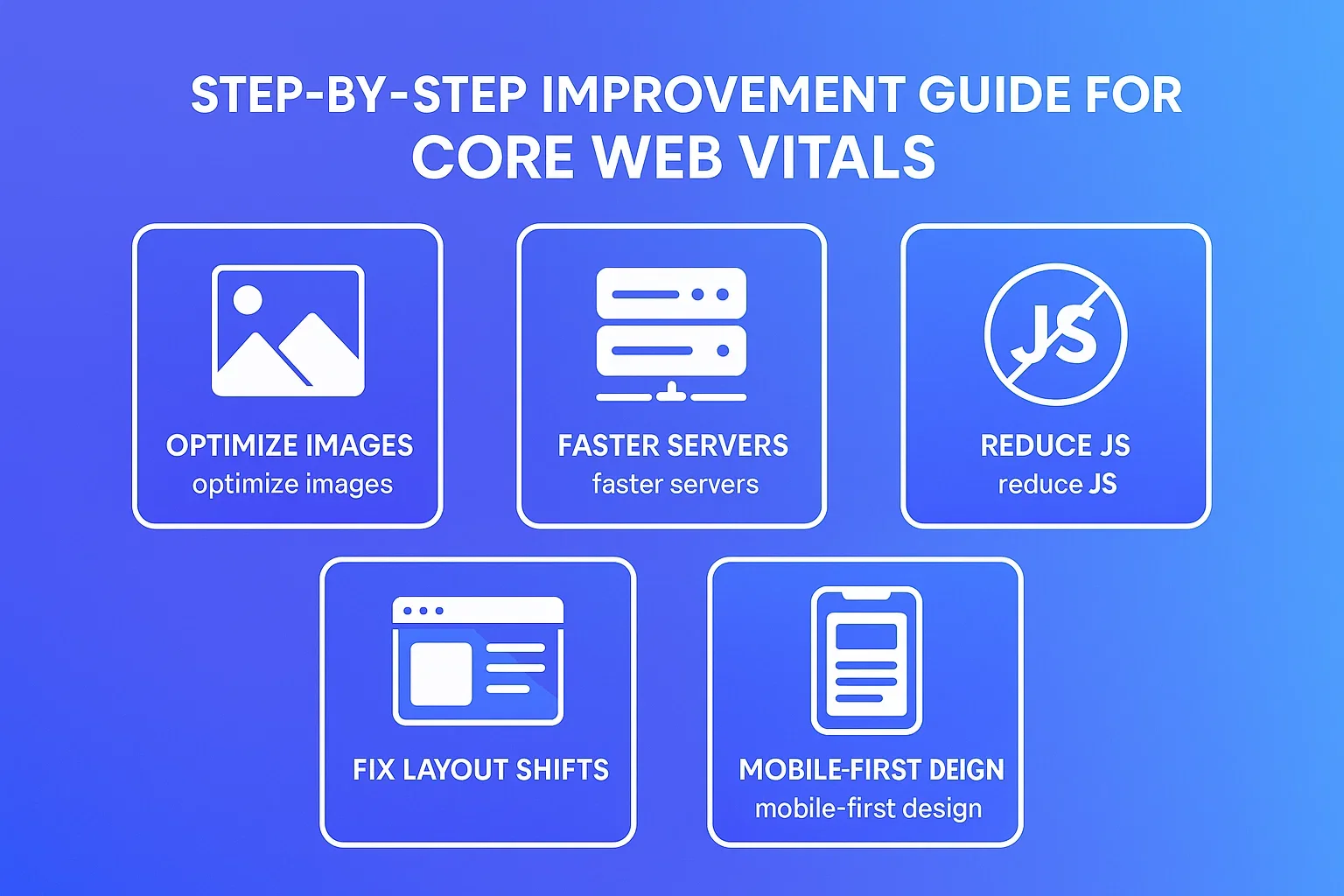
How to Improve Core Web Vitals
Improving Core Web Vitals in 2026 requires a combination of technical fixes and user-focused design. Here’s a step-by-step guide to optimizing each area:
Step 1 – Optimize Images and Media
Large, uncompressed images are one of the most common causes of poor Largest Contentful Paint (LCP). To fix this:
- Use next-gen formats like WebP or AVIF
- Serve responsive images using srcset
- Enable lazy loading for offscreen assets
Tools like Cloudflare Image Optimization or TinyPNG can help reduce file sizes dramatically. For clients, our web design services always integrate responsive image strategies.
Step 2 – Improve Server Response Time
A slow server response delays everything, including LCP and INP. To speed things up:
- Use a content delivery network (CDN)
- Enable caching (browser + server-level)
- Optimize databases and queries
You can measure bottlenecks using GTmetrix. For businesses with global audiences, pairing CDNs with our web development solutions ensures consistent speed across regions.
Step 3 – Minimize JavaScript and CSS
Excessive scripts are a major cause of poor Interaction to Next Paint (INP). To optimize:
- Defer non-critical scripts
- Split long tasks into smaller ones
- Minify and compress CSS & JS files
Google’s Web.dev INP guide provides clear recommendations. We also help businesses through CRO optimization services to cut execution delays.
Step 4 – Fix Layout Instability (CLS)
Poor Cumulative Layout Shift (CLS) often results from elements loading without reserved space. To fix this:
- Always define width/height attributes for images and videos
- Reserve ad and dynamic content slots
- Use font-display: swap for web fonts
More details are available in Google’s CLS documentation. In our SEO services, fixing CLS is one of the first steps toward higher rankings.
Step 5 – Prioritize Mobile Experience
Since Google indexes mobile-first, Core Web Vitals mobile scores often differ from desktop. To improve mobile performance:
- Use responsive frameworks
- Serve compressed images for smaller screens
- Reduce unused JavaScript that loads on mobile
Tools like Chrome DevTools help simulate different devices. For eCommerce clients, our eCommerce SEO services focus heavily on optimizing mobile conversions.

Core Web Vitals Optimization Services
Even with the right checklist and tools, many businesses struggle to achieve passing scores for Core Web Vitals 2026. The problem often lies in hidden technical debt, unoptimized code, or complex design systems that require professional intervention. That’s where Core Web Vitals optimization services come in.
Why Professional Optimization Matters
- Complex Sites: Large eCommerce platforms, healthcare portals, or enterprise dashboards often have thousands of templates. Fixing INP delays or CLS instability at scale requires technical expertise.
- Revenue Impact: A case study by Google’s Think with Google showed that improving Core Web Vitals can reduce bounce rates by 24% and increase conversions by 15%.
- Competitive Advantage: In crowded markets, even small performance gains can push your rankings ahead of competitors who ignore these updates.
Case Example: eCommerce Store Optimization
One of our retail clients ran an online fashion store with heavy product images and dynamic ad placements. Their Search Console Core Web Vitals report showed:
- LCP: 4.2 seconds (Poor)
- CLS: 0.28 (Poor)
- INP: 480ms (Needs Improvement)
By implementing advanced image compression, reserving ad spaces, and reducing JavaScript execution by 37%, we achieved:
- LCP: 2.1 seconds (Good)
- CLS: 0.06 (Good)
- INP: 180ms (Good)
Within three months, organic traffic increased by 32%, and conversion rates improved by 22%.
Why Choose Skymoon Infotech
At Skymoon Infotech, our optimization approach blends technical expertise with business goals:
- Technical Audits: Using tools like Lighthouse and Search Console, we identify bottlenecks at code and design levels.
- Actionable Fixes: From image optimization to CLS fixes, we apply proven methods tailored to your platform.
- ROI-Focused: Optimization isn’t just about passing scores—it’s about boosting SEO rankings, engagement, and revenue.
If you’re struggling with performance scores, our conversion rate optimization services and web development solutions can help you align with Google Page Experience 2026 standards.
Ready to turn this into an actual growth plan?
Our team builds strategies across SEO, paid advertising, AI search visibility, and website performance, matched to your budget and your goals, not a generic package.
- A real thirty minute call, not a sales pitch
- Recommendations specific to your business
- A short list of what to fix first
Conclusion
The Core Web Vitals 2026 update marks a significant milestone in Google’s journey toward prioritizing real user experience. With Interaction to Next Paint (INP) now replacing FID, alongside LCP and CLS, websites can no longer ignore performance as a secondary concern.
Businesses that invest in Core Web Vitals optimization see measurable benefits: higher SEO rankings, improved engagement, and increased conversions. From optimizing images and code to fixing layout instability, every improvement step contributes directly to growth.
At Skymoon Infotech, we specialize in delivering data-driven optimization solutions. Whether you’re a small business or an enterprise platform, aligning with Google Page Experience 2026 is no longer optional—it’s a competitive necessity.
Start by running a Core Web Vitals test today, and if you need expert support, explore our conversion rate optimization services to ensure your site is ready for the future.
Frequently Asked Questions
What are the Core Web Vitals in 2026?
Core Web Vitals in 2026 include Largest Contentful Paint (LCP), Cumulative Layout Shift (CLS), and Interaction to Next Paint (INP). INP officially replaced FID as the responsiveness metric.
How does INP affect SEO rankings?
Google confirmed that INP is part of the Page Experience ranking signal. A poor INP score (above 500ms) can negatively affect search visibility, especially on mobile devices.
What is the difference between Core Web Vitals mobile vs desktop?
Mobile scores are often lower due to weaker networks and devices. Optimizations like responsive images, critical CSS, and deferred scripts are crucial for mobile Core Web Vitals.
How can I check if my site passes Core Web Vitals?
You can test your site using PageSpeed Insights, Lighthouse, or the Core Web Vitals report in Search Console. These tools show whether your pages are classified as Good, Needs Improvement, or Poor.
Do I need professional help to improve Core Web Vitals?
While some fixes are DIY-friendly, complex platforms (eCommerce, healthcare, SaaS) often require Core Web Vitals optimization services to resolve deeper issues like JavaScript execution delays or large-scale CLS problems.
Let's turn this into results for your business.
SEO, paid advertising, AI search visibility, website design, and conversion optimization, all under one roof, all pointed at the same goal: revenue.