
Learning how to build an SEO friendly website is the single most important step you can take before your site goes live. Many business owners treat SEO as an afterthought after launching. That approach costs months of organic growth. When you build a website with SEO in mind from day one, search engines can crawl, index, and rank your content far more efficiently.
This guide covers the full process, from site architecture and design to a complete SEO checklist for new websites, so you can launch with confidence and rank faster.
Is your website actually built to convert?
Twenty two checks covering Core Web Vitals, user experience, and conversion paths. The exact list we run before every website audit.
What Makes a Website SEO Friendly?
An SEO friendly website is one that search engines can easily crawl, understand, and rank. It also provides a fast, clear experience for human visitors.
Google’s Search Essentials documentation identifies three core requirements for effective SEO: crawlability, relevance, and authority. Addressing all three before launch gives your site a significant advantage in search results.
Characteristics of an SEO friendly website:
- Clean, descriptive URLs that reflect page content
- Fast loading times on both desktop and mobile
- A logical site hierarchy that guides search crawlers
- Properly structured HTML with correct heading tags
- Original, keyword-targeted content on every page
Plan Your SEO Friendly Website Architecture First
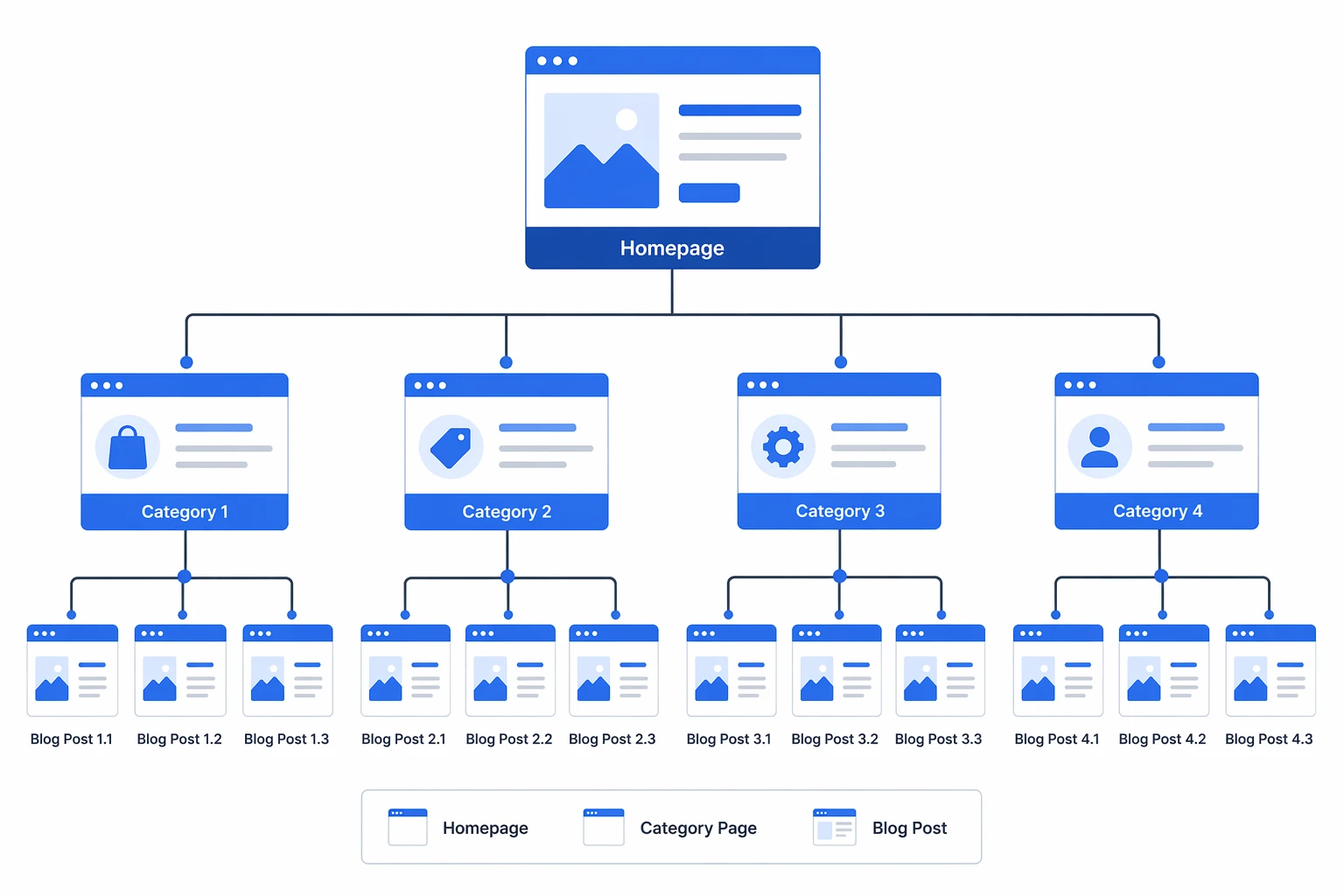
SEO friendly website architecture is the structural foundation of your entire search strategy. Before writing a single line of code, map out your complete site structure.
Search engines use a limited crawl budget to decide which pages to index. A flat, logical architecture helps crawlers discover every important page quickly. According to Ahrefs, pages buried more than three clicks from the homepage earn significantly fewer backlinks and far less organic traffic.
URL Structure and Site Hierarchy
Follow these rules when planning your URL and navigation structure:
- Keep URLs short, clean, and descriptive
- Use hyphens to separate words in URL slugs
- Reflect the page topic directly in the URL path
- Avoid session IDs, tracking parameters, and unnecessary folders in public URLs
A good URL example: yoursite.com/services/seo-web-design
A poor URL example: yoursite.com/page?id=4421&ref=xyz
Internal Linking from Day One
Internal links distribute authority across your website and help crawlers discover content. Plan a minimum of three to five internal links for each important page before you begin writing content.
SEO Friendly Web Design Principles
SEO friendly web design goes well beyond visual appeal. Design decisions directly affect your Core Web Vitals scores, user behavior signals, and ultimately your rankings in search results.
Google confirmed in its page experience update that Core Web Vitals are official ranking signals. A site that looks polished but loads slowly will consistently lose ground to a faster competitor.
Mobile-First Design
Over 60 percent of all global web traffic now comes from mobile devices, according to Statista’s 2024 Global Digital Report. Google uses mobile-first indexing, which means it crawls and evaluates the mobile version of your site for ranking purposes.
To meet mobile-first standards:
- Use responsive design rather than separate mobile URLs
- Ensure all text is readable without zooming or horizontal scrolling
- Make tap targets at least 48 by 48 pixels in size
- Test across multiple screen sizes before publishing any page
Page Speed and Core Web Vitals
Google’s Core Web Vitals measure three performance dimensions: Largest Contentful Paint (LCP), Interaction to Next Paint (INP), and Cumulative Layout Shift (CLS). Passing these thresholds delivers a direct ranking benefit.
Your website might be losing customers before they even scroll
Slow load times, confusing navigation, and weak calls to action quietly cost businesses real revenue every month. See exactly what yours is missing.
No commitment, just a clear picture of where you stand.
Target these benchmark scores:
- LCP under 2.5 seconds
- INP under 200 milliseconds
- CLS score below 0.1
Use Google PageSpeed Insights to audit your site both before and after launch.
SEO Best Practices for New Websites
SEO best practices for new websites differ from strategies used on established domains. New sites lack domain authority and backlinks. The priority should be technical soundness and well-targeted content from the very first day of launch.
Conduct Keyword Research Before You Build
Every page on your website should target a specific keyword or topic cluster. Conduct keyword research before writing any content.
Tools such as Ahrefs Keywords Explorer, Google Keyword Planner, and Semrush help identify:
- Estimated monthly search volume for target queries
- Keyword difficulty scores for realistic ranking targets
- Related questions users are actively searching
- Content gaps where competitors rank but you do not yet
Map each page to a primary keyword and a set of supporting related terms. This mapping forms the core of your new website SEO strategy.
On-Page SEO Fundamentals
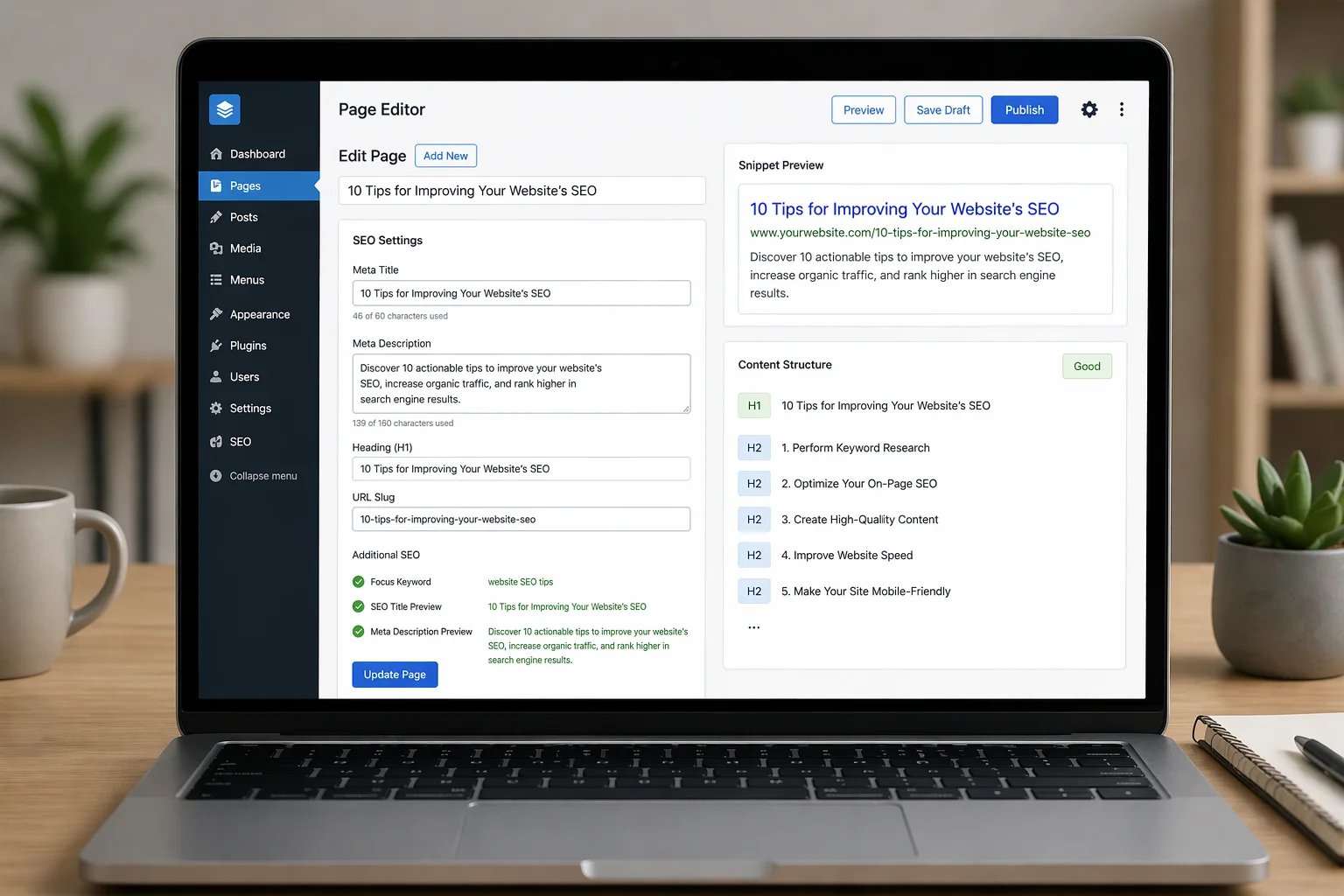
SEO website development best practices require proper on-page optimization on every published page. These elements signal content relevance to search engines.
Essential on-page elements for every page:
- Title tag: Include the primary keyword within 60 characters
- Meta description: Write a benefit-driven summary within 160 characters
- H1 tag: Use the primary keyword once per page
- Image alt text: Describe images using relevant keywords naturally
- Canonical tags: Prevent duplicate content issues across similar URLs
How to Do SEO for a New Website: A Launch Checklist
Understanding how to do SEO for a new website means having a structured plan in place both before and after launch. Use this website launch SEO checklist to avoid the most common mistakes new site owners make.
Pre-Launch Tasks:
- Create and submit an XML sitemap through Google Search Console
- Configure your robots.txt file to allow crawling of all important pages
- Install an SSL certificate (HTTPS is a confirmed Google ranking signal)
- Test every page for broken links and redirect errors
- Verify full mobile responsiveness across multiple device sizes
- Run Google PageSpeed Insights and fix any critical performance issues
- Add schema markup for articles, FAQs, and your organization details
- Confirm that AI crawlers such as GPTBot and PerplexityBot are not blocked
Post-Launch Tasks:
- Monitor crawl errors in Google Search Console on a weekly basis
- Track keyword rankings using a dedicated rank tracking tool
- Build initial backlinks through relevant directories and targeted outreach
- Publish new, optimized content on a consistent monthly schedule
- Review Core Web Vitals data at least once per month
New Website SEO Strategy for Long-Term Growth
A sustainable new website SEO strategy rests on three core pillars: technical health, content quality, and authority building.
Technical health means your site is fully crawlable, fast, and free of structural errors. Content quality means every page answers a specific user query better than competing results. Authority building means earning backlinks from relevant, high-quality websites over time.
Research from Moz shows that domain authority grows faster with consistent content publishing. Earning links from domains with authority scores above 50 accelerates this growth. Aim to publish at least two well-optimized pieces of content per month during your first year online.
A typical SEO timeline for new websites:
- Months 1 to 3: Technical setup, foundational content, and indexation
- Months 4 to 6: Content expansion and initial backlink outreach
- Months 7 to 12: Ranking consolidation, authority growth, and conversion optimization
Most new sites begin to see meaningful organic traffic between three and six months after launch. Patience, combined with consistent effort, is what separates successful sites from stalled ones.
Frequently Asked Questions (FAQs)
How long does it take for a new website to rank on Google?
Most new websites begin to see measurable organic traffic within three to six months of launch. Sites in highly competitive niches may need nine to twelve months. Consistent content publishing and active backlink building help accelerate this timeline significantly. Technical issues and thin content are the most common reasons for slower ranking progress.
What is the most important SEO factor for a new website?
Technical SEO is the most critical starting point for any new site. A website that cannot be crawled or indexed will not rank, regardless of content quality. Once technical health is confirmed, content relevance and strategic keyword targeting become the primary drivers of long-term ranking growth.
Does website design affect SEO rankings?
Yes. SEO friendly web design directly impacts Core Web Vitals scores, mobile usability ratings, and user behavior signals such as bounce rate and time on page. These factors influence how search engines evaluate overall page quality. Poor design choices can undermine even the strongest content and keyword strategy.
What should an SEO checklist for a new website include?
A complete SEO checklist for a new website should cover technical setup including XML sitemap, robots.txt, and HTTPS installation, on-page elements such as title tags and meta descriptions, schema markup for structured data, mobile responsiveness testing, and a content plan targeting specific primary and secondary keywords from the day of launch.
Ready to turn this into an actual growth plan?
Our team builds strategies across SEO, paid advertising, AI search visibility, and website performance, matched to your budget and your goals, not a generic package.
- A real thirty minute call, not a sales pitch
- Recommendations specific to your business
- A short list of what to fix first
Conclusion
Building an SEO friendly website from day one is a strategic investment that delivers consistent organic returns for years ahead. Combining solid SEO friendly website architecture with clean design, targeted content, and a structured launch plan gives search engines everything they need to find and rank your pages.
Use this guide as your SEO checklist for a new website. Start with a strong technical foundation, apply on-page best practices to every published page, and grow your domain authority gradually through quality content and earned backlinks. That is how you create a website that performs better in search results with every month that passes.
Let's turn this into results for your business.
SEO, paid advertising, AI search visibility, website design, and conversion optimization, all under one roof, all pointed at the same goal: revenue.