
In simple terms, it is the practice of promoting products, services, or brands using digital channels such as search engines, social media, email, and websites. Unlike traditional marketing, digital marketing connects businesses with customers online where they spend most of their time. In today’s world, where internet users in India have crossed 900 million, digital marketing is no longer optional—it is a necessity for survival and growth.
Digital Marketing Definition & Importance
The digital marketing definition is straightforward: it refers to all marketing efforts that use the internet or electronic devices. From running paid ads on Google to posting videos on Instagram, digital marketing helps brands reach audiences in real-time, across geographies, and at a fraction of the cost of traditional campaigns.
The checklist our strategists use before every audit
Twenty seven checks across SEO, paid advertising, AI search visibility, website performance, and conversion optimization. Grab it free and see where your biggest gaps are.
The importance of digital marketing lies in its ability to level the playing field. A small business in Ahmedabad can now target the same customers online as a global enterprise. Campaigns are measurable, cost-efficient, and customizable to every stage of the buyer’s journey. According to Statista, global digital ad spend is projected to reach over $740 billion in 2025, highlighting its dominance as the future of marketing.
For businesses in India, digital marketing is especially crucial. The growing number of smartphone users and affordable internet have opened massive opportunities for brands to connect with urban and rural audiences alike. By investing in a clear online strategy, companies can build visibility, trust, and conversions faster than ever before.
Whether you are a startup looking to scale or an established enterprise aiming to stay relevant, digital marketing is the most powerful tool to achieve sustainable growth.
Types of Digital Marketing Channels
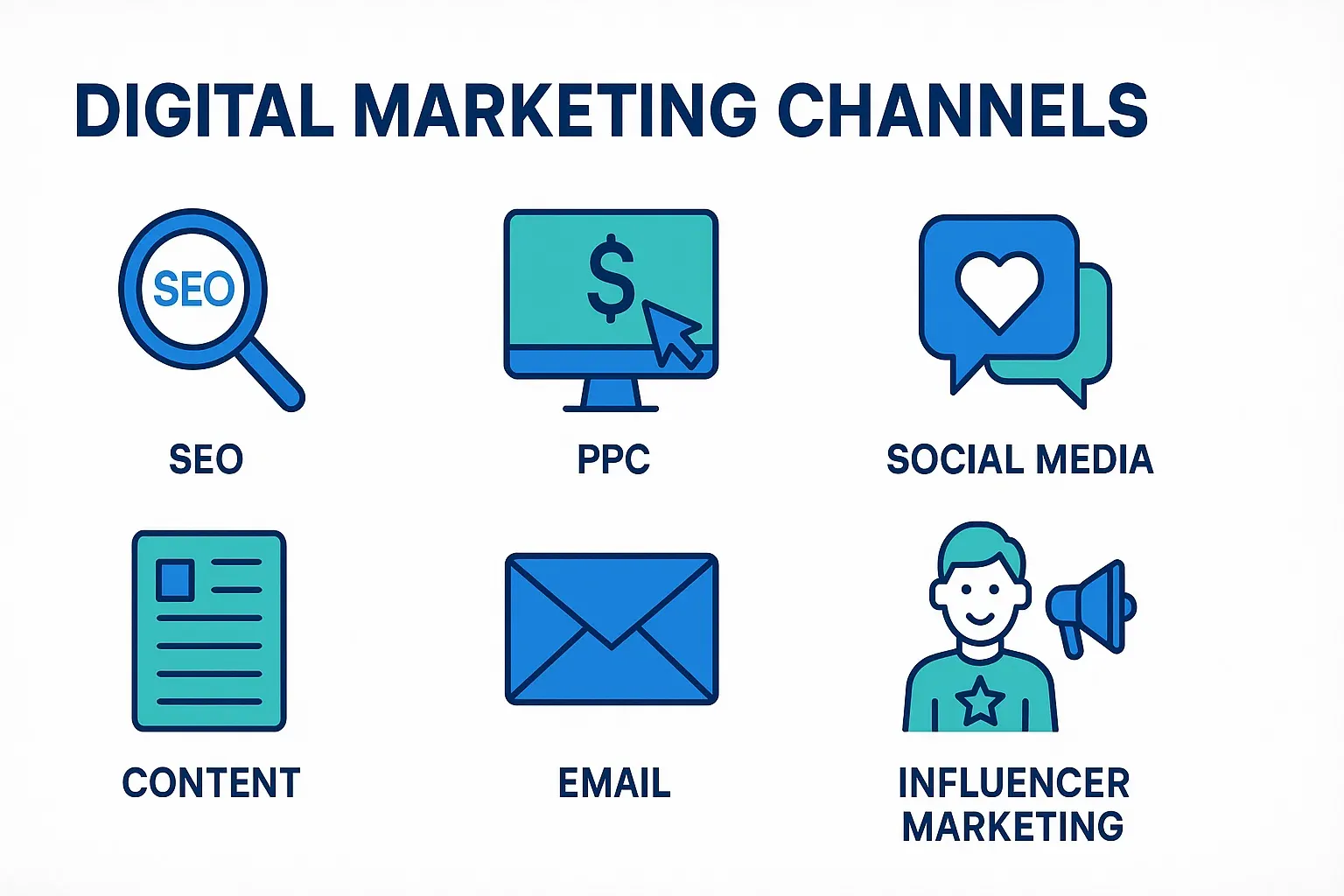
There are many types of digital marketing channels that businesses can use to build awareness, generate leads, and drive conversions. Each channel works differently, but when combined, they create a powerful ecosystem for reaching the right audience at the right time. Here are the most effective ones:
Search Engine Optimization (SEO)
SEO is the foundation of digital marketing. It focuses on optimizing your website to rank higher on search engines like Google. By targeting relevant keywords, improving site speed, and building quality backlinks, SEO ensures your business is discoverable when people search online.
Example: A clothing brand in India can rank for terms like “organic cotton shirts” and attract buyers directly to its eCommerce store.
Pay-Per-Click (PPC) Advertising
PPC ads are paid campaigns that appear on search engines and social media platforms. Advertisers pay only when someone clicks on their ad, making it a cost-effective way to target high-intent audiences.
Example: A startup in Ahmedabad can run Google Ads to instantly appear for searches like “best coworking spaces near me.”
Social Media Marketing
From Facebook to Instagram to LinkedIn, social media platforms are vital digital marketing channels for engaging with customers. Businesses can build brand awareness, run targeted ads, and foster communities through regular posting and interaction.
Example: Restaurants often use Instagram Reels to showcase dishes and drive foot traffic.
Content Marketing
Content marketing involves creating valuable resources such as blogs, guides, videos, and infographics. Instead of pushing sales directly, content builds trust and authority, nurturing customers over time.
Example: A healthcare brand publishing blogs on fitness tips to educate and attract readers.
Email Marketing
Email is one of the most reliable and cost-efficient types of digital marketing. It helps businesses maintain ongoing communication with customers by sending newsletters, product updates, or personalized offers.
Example: An eCommerce store sending exclusive discount codes to loyal subscribers.
Affiliate & Influencer Marketing
Affiliate partners and influencers promote your products to their audiences, earning a commission or fee for conversions. With rising trust in online personalities, influencer marketing has become a dominant channel, especially in India.
Example: A tech company collaborating with YouTube reviewers to showcase a new gadget.
Together, these channels form the backbone of digital marketing strategies. By choosing the right mix, businesses can maximize reach, improve ROI, and achieve both short-term and long-term goals.
Benefits of Digital Marketing for Businesses
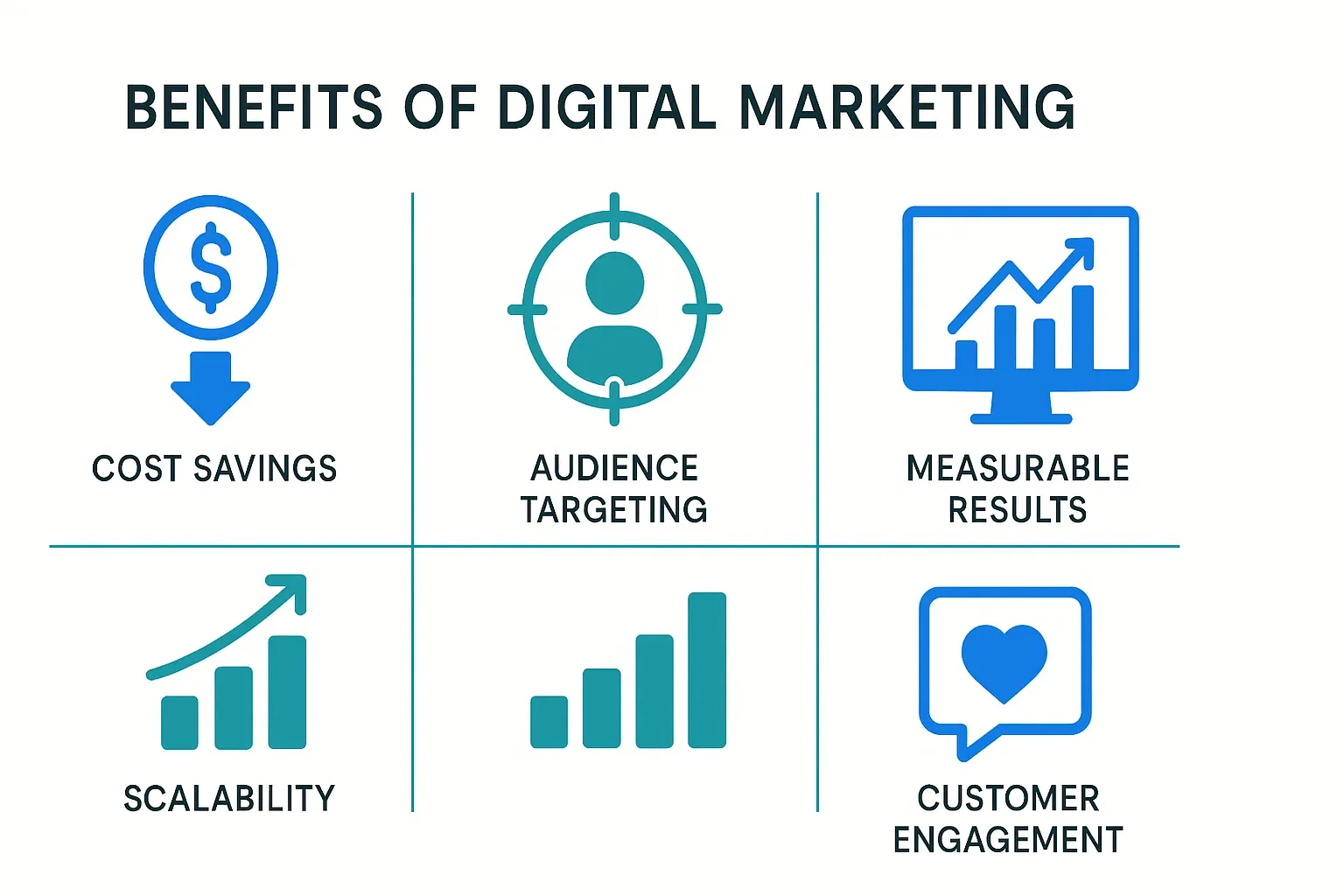
One of the most powerful aspects of going digital is its measurable impact on business growth. The benefits of digital marketing extend far beyond cost savings—they empower companies to compete globally, target precisely, and track results in real time.
Here are some key advantages:
- Cost-Effective Growth Compared to traditional advertising, digital campaigns are far more affordable. A small business can run highly targeted ads on Google or Facebook with a fraction of the budget required for TV or print.
- Targeted Audience Reach Businesses can define exactly who they want to reach based on demographics, interests, and location. This ensures every rupee or dollar spent is directed toward the right audience.
- Measurable Results With tools like Google Analytics and social dashboards, you can measure every click, impression, and conversion. This level of data makes it easier to optimize campaigns for better ROI.
- Global & Local Visibility Whether targeting international markets or focusing on metro cities like Ahmedabad and Surat, digital marketing allows businesses to expand their reach without geographic limits.
- Scalability & Flexibility Campaigns can be scaled up or down instantly depending on business goals and seasonal demand, making it perfect for startups and SMEs.
- Customer Engagement & Loyalty Through interactive channels like social media and email, brands can create two-way communication, improving trust and long-term loyalty.
Advantages and Disadvantages of Digital Marketing
Like every approach, digital marketing also has its challenges:
- Advantages: Cost efficiency, targeted reach, measurable outcomes, real-time engagement, scalability.
- Disadvantages: High competition, risk of ad fraud, rapid changes in technology, privacy concerns.
The key lies in focusing on strengths while proactively managing challenges. With the right strategy, the advantages far outweigh the drawbacks.
Digital Marketing Strategy – How It Works
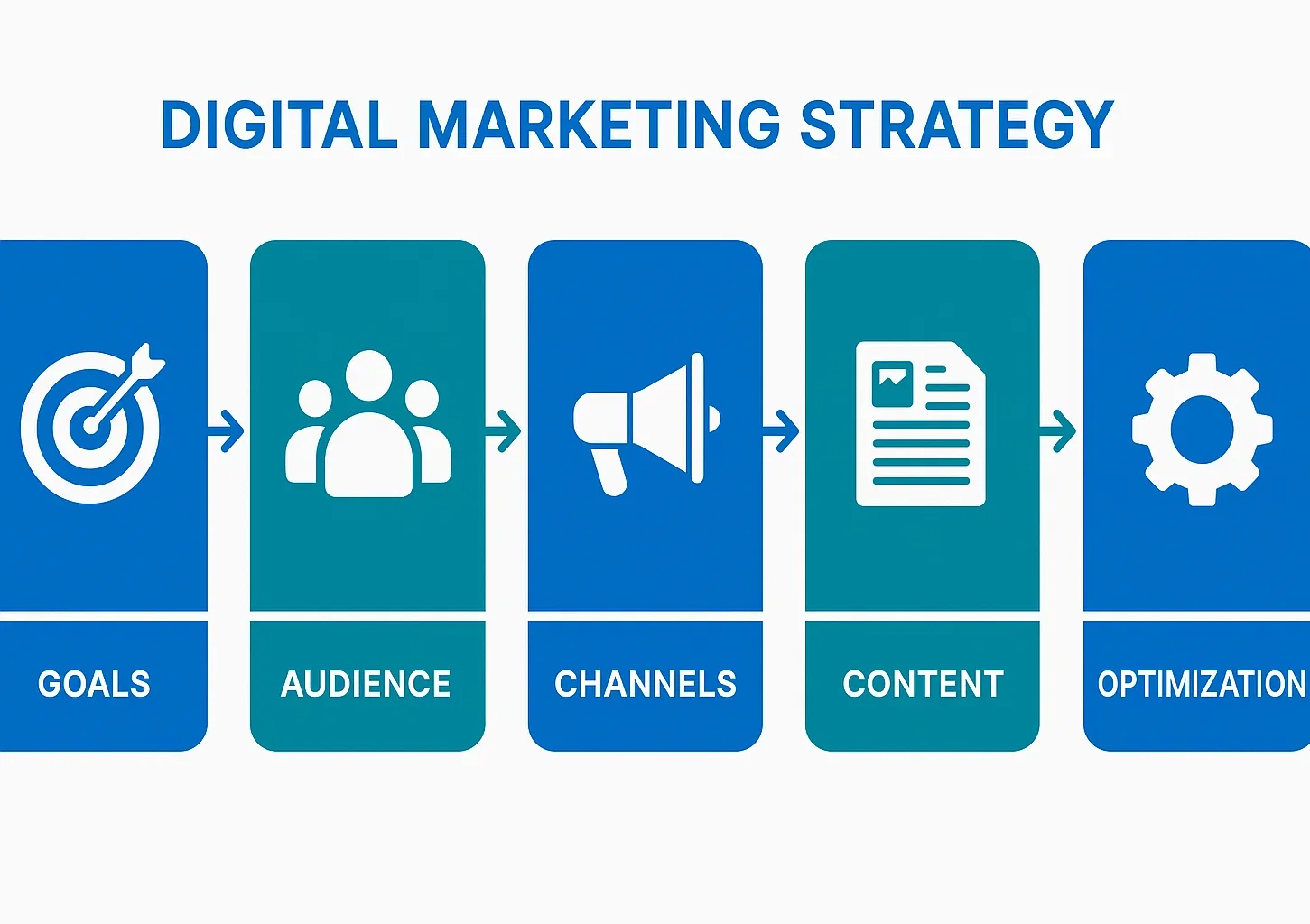
A successful campaign requires more than using different channels—it needs a clear digital marketing strategy. This strategy outlines how a business will attract, engage, and convert customers online.
Here’s a simple breakdown of how digital marketing works in practice:
Step 1: Define Business Goals
Every strategy begins with clarity. Do you want to build brand awareness, generate leads, or increase online sales? Setting specific goals ensures campaigns stay focused.
Step 2: Identify the Target Audience
Knowing your ideal customer is critical. Digital platforms allow businesses to define audiences based on age, gender, location, interests, and behavior—ensuring campaigns reach the right people.
How much revenue are you leaving on the table?
Most businesses lose real growth to gaps they cannot see, in SEO, paid ads, website performance, or AI search visibility. A free audit shows you exactly where.
No commitment, just a clear picture of where you stand.
Step 3: Choose the Right Channels
From SEO to PPC, social media to email, the choice of channels depends on your goals and audience. For example, B2B companies often prefer LinkedIn, while B2C brands thrive on Instagram.
Step 4: Create Valuable Content
Content fuels every channel. Whether it’s a blog post, video, infographic, or ad copy, valuable content builds trust and drives engagement.
Step 5: Implement Tracking & KPIs
No strategy is complete without measurement. Businesses should track KPIs of digital marketing such as clicks, conversions, and ROI to understand what’s working and where to optimize.
Step 6: Continuous Optimization
The digital landscape changes fast. By analyzing campaign results and making adjustments, businesses can improve efficiency and maximize returns.
📊 Stat to Support: According to CoSchedule, businesses that document their digital marketing strategies are 313% more likely to report success than those without a plan.
The takeaway: A digital marketing strategy is not a one-time effort—it’s a continuous cycle of planning, execution, measurement, and optimization.
Digital Marketing vs Traditional Marketing
One of the most common questions businesses ask is: Which is better—digital marketing or traditional marketing? Both have their strengths, but the differences are clear when you compare reach, cost, targeting, and measurement.
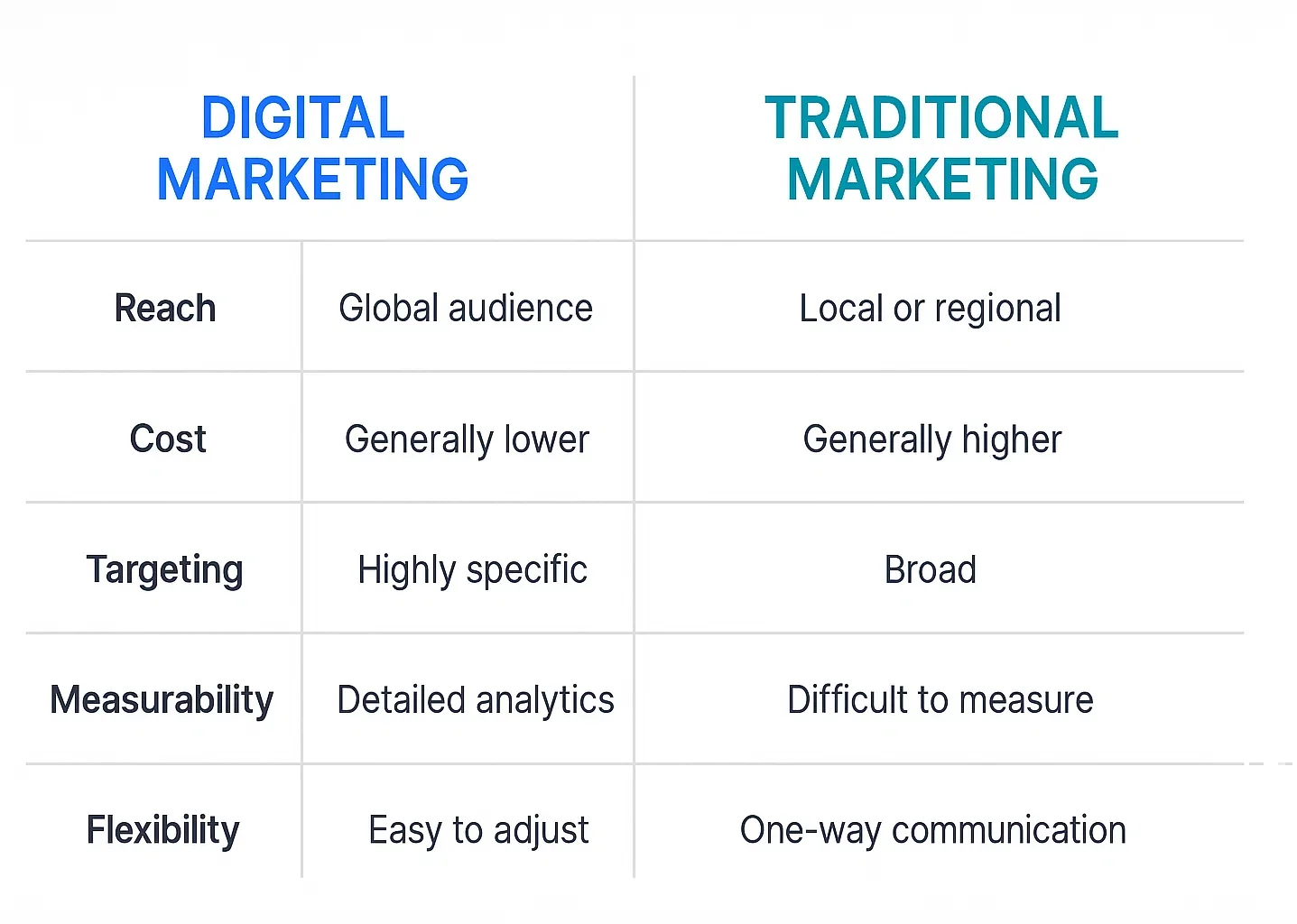
Here’s how digital marketing vs traditional marketing stacks up:
| Factor | Digital Marketing | Traditional Marketing |
|---|---|---|
| Reach | Global + local targeting through search, social, email | Limited to print, TV, radio, and location-based audiences |
| Cost | Budget-friendly with options for startups and SMEs | Expensive; high entry costs for TV, print, or outdoor ads |
| Targeting | Highly precise—based on demographics, interests, location | Broad, less personalized targeting |
| Measurability | Real-time tracking with KPIs like CTR, CPC, ROI | Difficult to measure impact; relies on surveys or estimates |
| Flexibility | Easy to adjust campaigns instantly | Changes require more time and cost |
| Customer Engagement | Two-way interaction via social media, chatbots, email | One-way communication with limited feedback |
While traditional marketing still plays a role for certain industries (like luxury goods or rural reach), digital marketing provides more cost efficiency, flexibility, and data-driven insights—making it the preferred choice for most modern businesses.
📊 Supporting Data
According to Statista, 74% of global marketing spend in 2025 is projected to go into digital channels, compared to just 26% for traditional mediums.
Digital Marketing Examples in 2025
Understanding theory is important, but real-world campaigns show the true impact of digital marketing. Here are some practical digital marketing examples in 2025 that highlight its growing influence:
- AI-Powered Ad TargetingBrands are increasingly using artificial intelligence to predict customer behavior and deliver ads tailored to individual preferences. For example, eCommerce platforms in India now use AI to recommend products based on browsing history.
- Influencer-Led Campaigns Businesses partner with micro-influencers who have highly engaged audiences. A small skincare brand collaborating with Instagram beauty influencers can achieve stronger trust and conversions than running a TV commercial.
- Personalized Email Journeys Companies design automated email sequences based on user actions. If a customer abandons a shopping cart, a personalized reminder with a discount code can bring them back.
- Short-Form Video Dominance Platforms like Instagram Reels and YouTube Shorts are now central to digital campaigns. Restaurants, gyms, and local shops increasingly rely on short videos to capture attention.
- Local Search Optimization Small businesses optimize for “near me” searches, ensuring they appear when customers look for services in metro cities like Ahmedabad, Surat, and Vadodara.
These examples prove that the future of digital marketing is about personalization, real-time engagement, and customer experience. Businesses that adopt these practices today are better prepared for tomorrow.
KPIs & Measuring Success in Digital Marketing
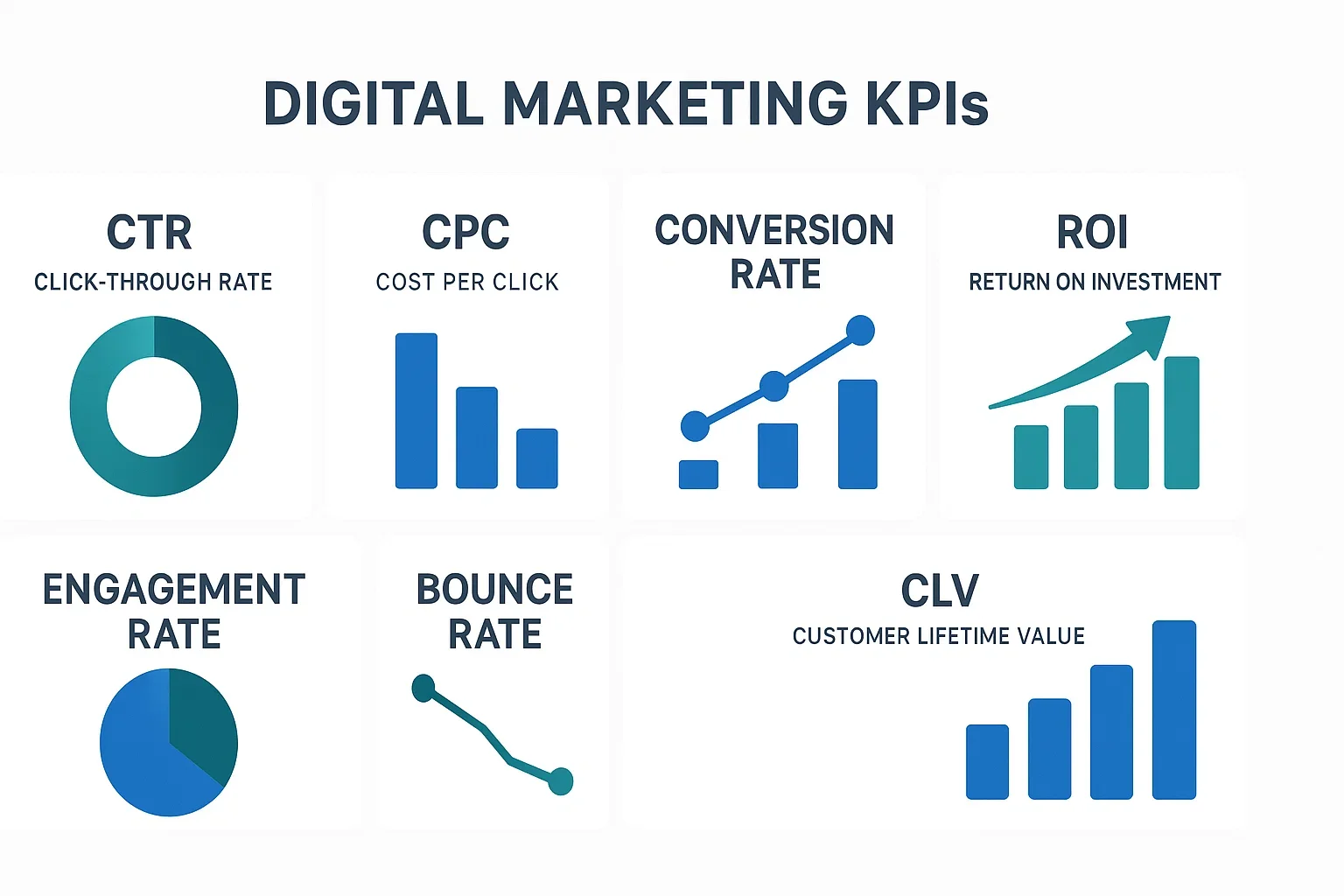
A strong campaign doesn’t just run—it gets measured. The right KPIs of digital marketing help businesses understand whether their efforts are driving results. Unlike traditional ads, digital marketing provides real-time data, making it easier to refine strategies.
Here are some of the most important KPIs every business should track:
| KPI (Key Performance Indicator) | What It Measures | Why It Matters |
|---|---|---|
| CTR (Click-Through Rate) | % of users who click on your ad or link | Shows ad relevance and effectiveness |
| CPC (Cost Per Click) | Cost for each click on your ad | Helps manage ad budget efficiency |
| Conversion Rate | % of visitors who take desired action (purchase, sign-up) | Measures success of landing pages and offers |
| ROI (Return on Investment) | Revenue generated vs cost of campaign | Determines profitability of digital campaigns |
| Engagement Rate | Likes, shares, comments, interactions on content | Indicates brand resonance with audience |
| Bounce Rate | % of users leaving site without action | Signals website or content relevance issues |
| Customer Lifetime Value (CLV) | Revenue from a customer over their relationship with your business | Helps plan long-term marketing investments |
By tracking these KPIs, businesses can identify what’s working, what needs improvement, and how to maximize return on every marketing dollar.
📊 Stat Insight: According to HubSpot, companies that regularly monitor KPIs are 72% more likely to achieve higher ROI from digital campaigns compared to those that don’t.
Role of AI in Digital Marketing
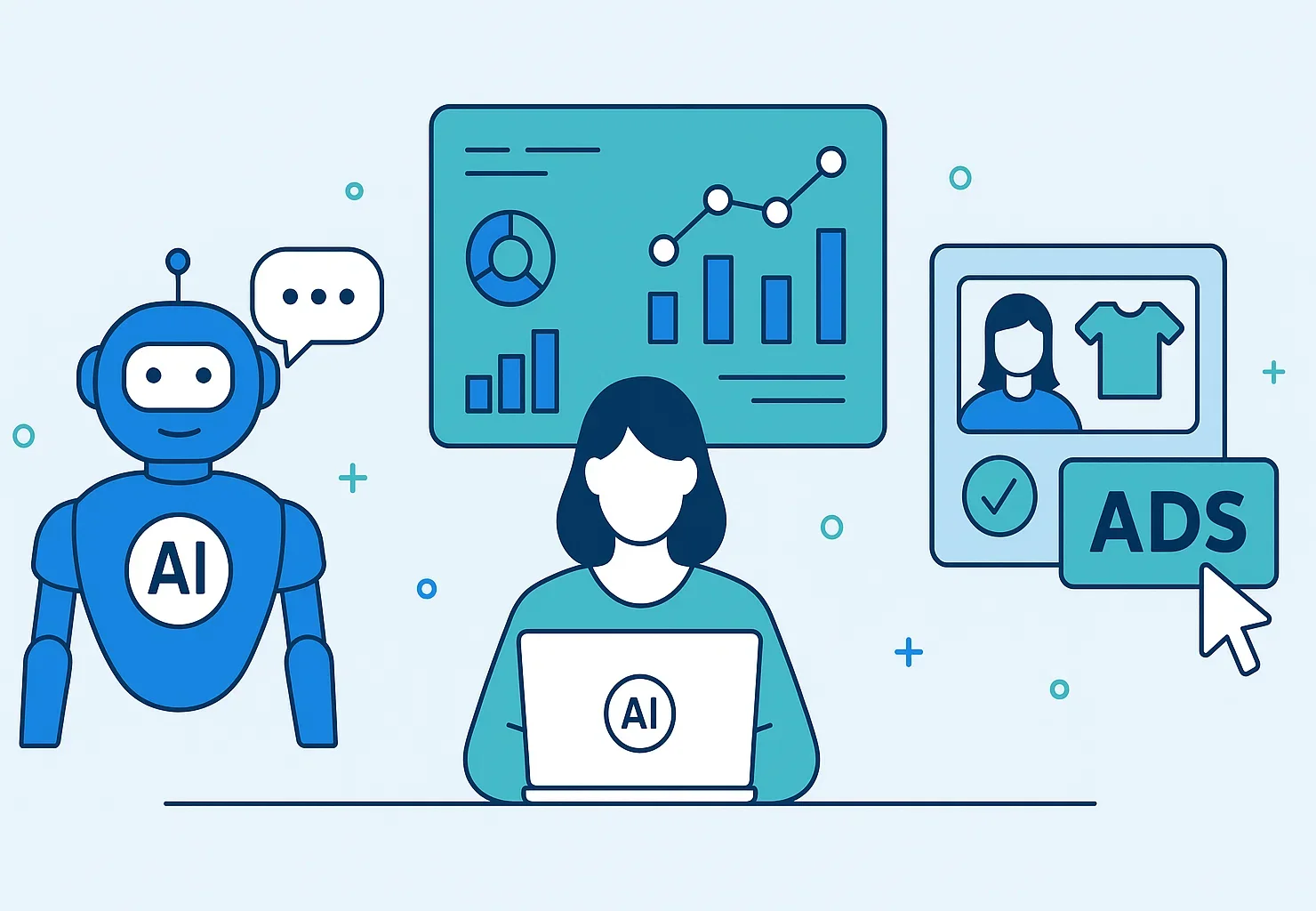
The role of AI in digital marketing has grown rapidly over the past few years. Artificial intelligence now powers everything from customer targeting to personalized recommendations, making campaigns smarter and more efficient.
Here are some of the ways AI is reshaping digital marketing in 2025:
- Personalization at Scale AI analyzes browsing behavior, purchase history, and demographics to deliver tailored content. For example, eCommerce platforms use AI to recommend products based on a customer’s last interaction.
- Predictive Analytics By studying patterns in large data sets, AI can forecast customer behavior—such as when they are most likely to make a purchase. This helps businesses time their campaigns for maximum impact.
- Chatbots & Virtual Assistants AI-driven chatbots handle customer inquiries 24/7, reducing response times and improving user experience. For instance, healthcare brands in India now use chatbots to answer FAQs and schedule appointments.
- Programmatic Advertising AI automates ad buying, ensuring that campaigns target the right audience at the right time. This reduces wasted spend and increases ad relevance.
- Content Creation & Optimization Tools powered by AI help generate headlines, optimize SEO keywords, and even suggest ideal posting times for social platforms.
In short, AI is not replacing marketers—it’s empowering them with smarter tools and deeper insights. Businesses that embrace AI in their digital marketing strategies can achieve higher efficiency, better personalization, and stronger ROI.
Scope of Digital Marketing in India
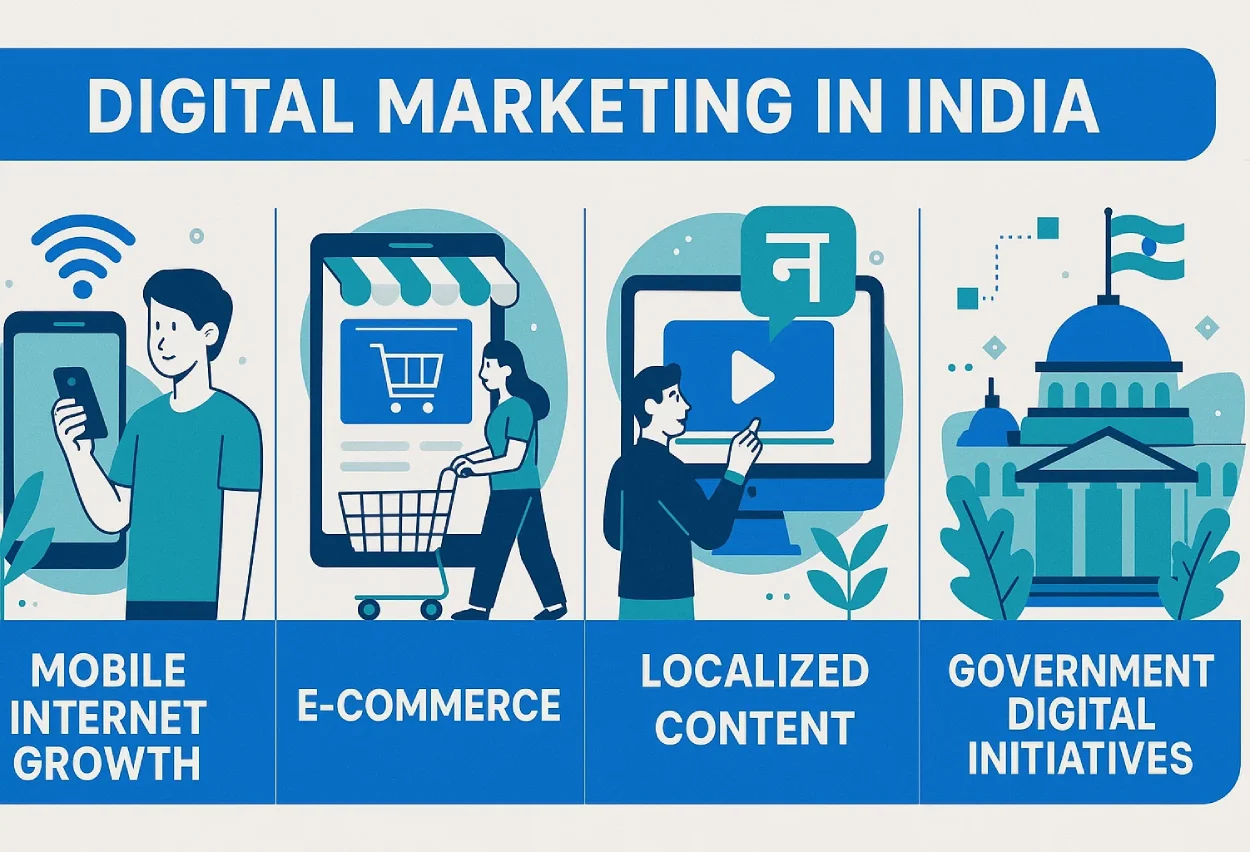
The scope of digital marketing in India is expanding at a record pace. With over 900 million internet users and one of the world’s fastest-growing online markets, India presents enormous opportunities for businesses that embrace digital strategies.
Here are some reasons why digital marketing has such vast potential in India:
- Explosive Internet Growth Affordable smartphones and low-cost data plans have made internet access available to rural and urban areas alike. India is now the second-largest online market in the world.
- E-commerce Expansion Platforms like Flipkart, Amazon, and JioMart are driving massive growth in online shopping. Small and medium-sized businesses are also adopting digital storefronts to reach wider audiences.
- Rise of Localized Marketing Indian consumers are diverse, with multiple languages and cultural preferences. Digital marketing enables hyper-local targeting, allowing businesses to customize content regionally.
- Government Push for Digitalization Initiatives like Digital India and UPI-based payments have accelerated the adoption of online services, making digital marketing more relevant than ever.
- Job & Career Opportunities According to NASSCOM, India’s digital marketing industry is expected to generate over 20 lakh jobs by 2030, making it a high-demand career path.
For startups, SMEs, and even established enterprises, the scope of digital marketing in India is immense. From metro cities like Ahmedabad and Mumbai to smaller towns, businesses have the chance to connect directly with millions of online consumers.

Learn Digital Marketing Online
For professionals, students, and entrepreneurs, the ability to learn digital marketing online has never been easier. Today, there are countless free and paid courses that teach everything from SEO basics to advanced analytics.
Here are some of the best ways to get started:
- Google Digital Garage (Free) Google offers a beginner-friendly course covering fundamentals of digital marketing, complete with a certificate of completion. (Outbound link → Google Digital Garage)
- Coursera & edX Platforms like Coursera and edX partner with universities and global institutions to provide structured courses on SEO, PPC, social media, and analytics. (Outbound link → Coursera)
- HubSpot Academy HubSpot’s training platform provides free lessons on content marketing, inbound methodology, and social media strategies.
- YouTube Tutorials & Blogs Many industry experts share updated tips and tutorials, making YouTube and blogs a great source of ongoing learning.
- Advanced Certification Programs Institutes across India now offer advanced diplomas and certification programs for those seeking careers in digital marketing.
Whether you want to upskill, switch careers, or grow your business, online learning platforms make digital marketing knowledge accessible to everyone—at your own pace and budget.
Latest Statistics & Trends in Digital Marketing (2025)
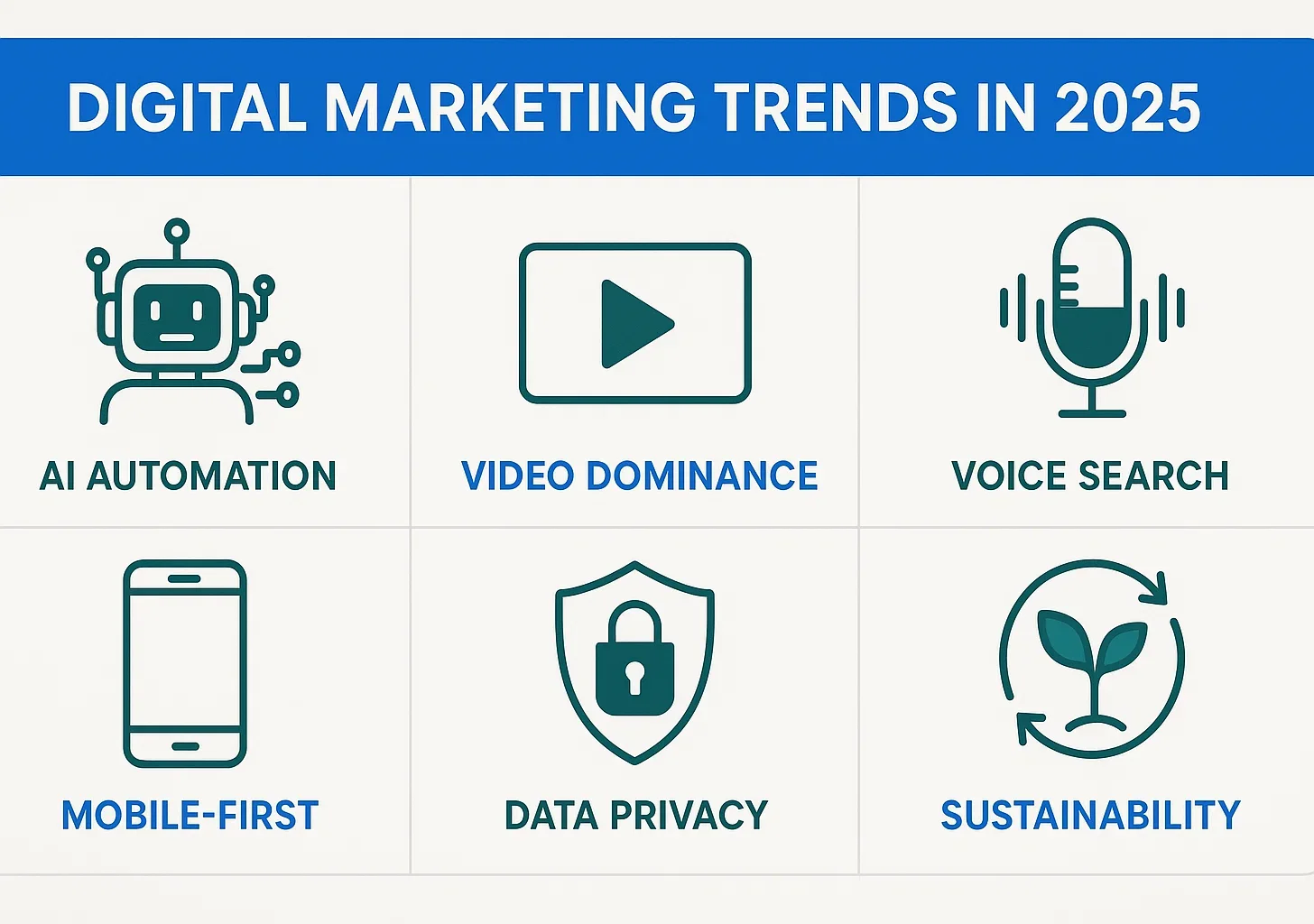
The future of digital marketing is being shaped by rapid technological change, evolving consumer behavior, and new regulatory frameworks. To stay competitive, businesses must keep pace with emerging trends.
Here are some key digital marketing trends in 2025:
- AI & Automation Everywhere Over 80% of marketing leaders now use AI tools to automate content creation, ad targeting, and customer engagement. This shift reduces costs while improving personalization.
- Video Dominance Short-form video continues to lead the way. By 2025, video is expected to account for over 82% of all online traffic (Cisco).
- Voice Search Optimization With the rise of smart speakers and mobile assistants, optimizing content for natural language queries is now essential.
- Data Privacy & Transparency Stricter regulations like GDPR and India’s DPDP Act are forcing marketers to adopt transparent data collection practices and focus on trust.
- Mobile-First Campaigns In India, more than 75% of internet users access the web via smartphones. Mobile-optimized websites and ads are no longer optional—they are mandatory.
- Sustainability Messaging Brands that showcase eco-friendly practices and social responsibility are gaining more traction among younger audiences.
📊 Stat Round-up (2025):
- Global digital ad spend: $740B+ (Statista)
- Indian digital ad industry: ₹67,000 crore by 2025 (NASSCOM)
- 93% of online experiences begin with a search engine (HubSpot)
The future of digital marketing is data-driven, mobile-first, and AI-powered. Businesses that adapt early will gain a long-term competitive edge.
Ready to turn this into an actual growth plan?
Our team builds strategies across SEO, paid advertising, AI search visibility, and website performance, matched to your budget and your goals, not a generic package.
- A real thirty minute call, not a sales pitch
- Recommendations specific to your business
- A short list of what to fix first
Conclusion – Why Digital Marketing Matters More Than Ever
From definitions and channels to strategies and future trends, one thing is clear: digital marketing is no longer optional—it is essential. It empowers businesses to reach the right audience, track every interaction, and compete globally, all while remaining cost-effective.
The benefits of digital marketing—such as measurable results, targeted campaigns, and flexibility—outweigh the challenges. With emerging technologies like AI and automation, the future of digital marketing is even more dynamic, offering businesses new ways to connect and grow.
Whether you’re a startup looking to build visibility, an SME targeting local customers, or an enterprise planning global expansion, digital marketing is the key to achieving sustainable success.
At Skymoon Infotech, we specialize in creating strategies that drive measurable growth. From SEO and PPC to CRO and full-service campaigns, our team helps businesses turn digital opportunities into real results.
Ready to take your business to the next level?
Explore Skymoon Infotech’s Digital Marketing Services and discover how we can help you grow smarter in the digital age.
What is digital marketing in simple words?
Digital marketing is the use of online platforms—like search engines, social media, email, and websites—to promote products, services, or brands.
What are the 7 types of digital marketing?
The main types include SEO, PPC advertising, social media marketing, content marketing, email marketing, influencer/affiliate marketing, and mobile marketing.
Why is digital marketing important for small businesses?
Digital marketing allows small businesses to reach their target audience affordably, measure results in real time, and compete with larger brands online.
Is digital marketing the future?
Yes. With increasing internet usage, AI-driven tools, and mobile-first habits, the future of digital marketing will continue to grow, replacing many traditional methods.
Which is better—digital marketing or traditional marketing?
Digital marketing is generally more cost-effective, measurable, and targeted, while traditional marketing is broad and less data-driven. Most businesses now prefer digital.
How can small businesses use digital marketing effectively?
They can start with SEO, run localized PPC ads, use social media to build awareness, and send email campaigns to nurture customers affordably.
Let's turn this into results for your business.
SEO, paid advertising, AI search visibility, website design, and conversion optimization, all under one roof, all pointed at the same goal: revenue.