
What Are Meta Tags?
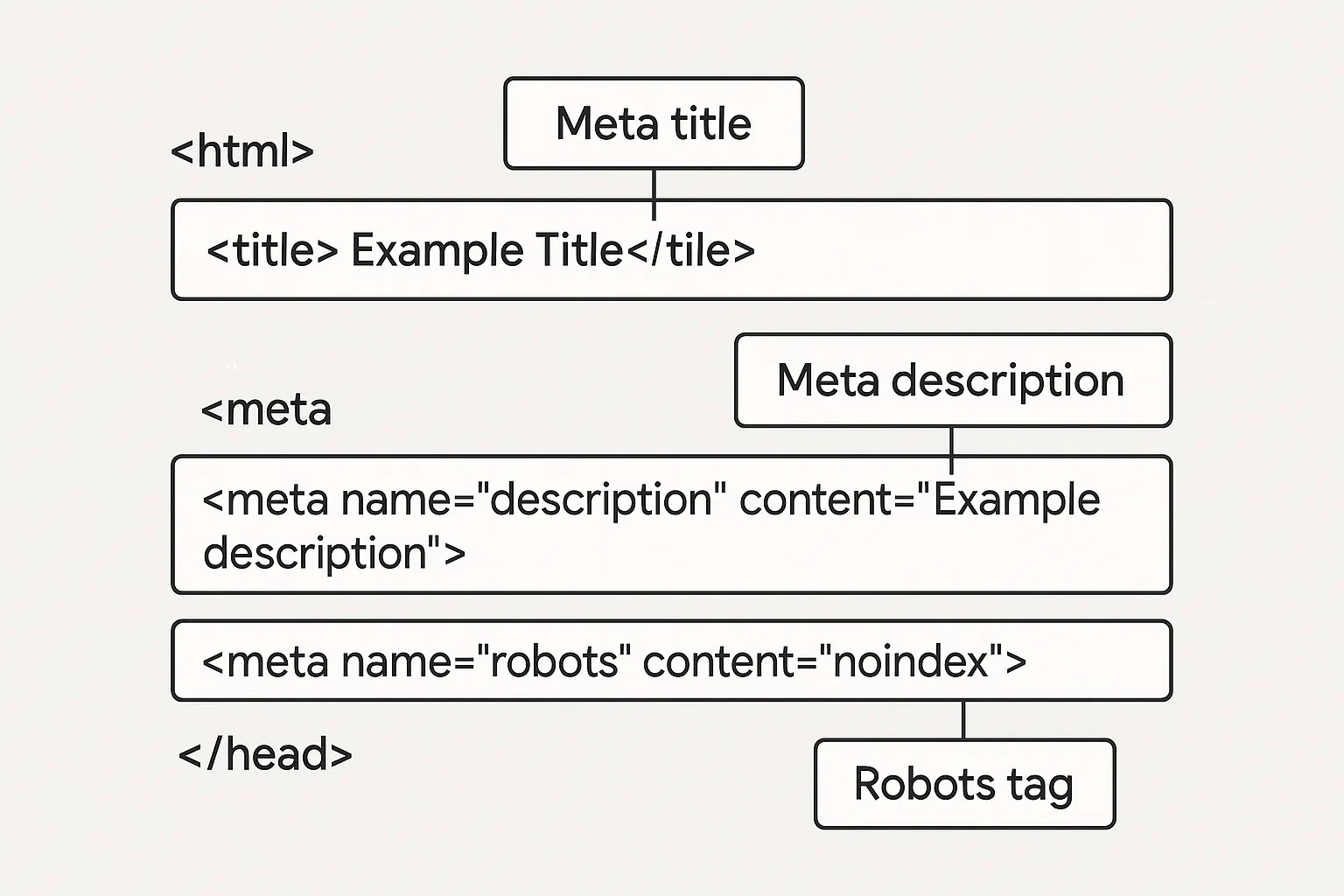
Meta tags are short snippets of HTML code placed inside a webpage’s <head> section. While invisible to visitors, they’re extremely valuable for communicating with search engines. They help describe what the page is about, how it should appear in search results, and how it should be crawled.
Whether you’re managing a business website or an eCommerce store, understanding meta tags is crucial for effective on-page SEO.
The SEO checklist that finds what is actually holding you back
Twenty seven checks covering technical SEO, on page structure, and link strategy. The same list our team runs before quoting any new client.
Title Tag vs Meta Title — What’s the Difference?
The title tag defines the headline of your webpage that appears in search engine results. It’s often the first interaction a user has with your content—and it’s a ranking factor.
Though people casually refer to it as a “meta title,” the correct HTML tag is <title>. A strong title tag should:
- Include your focus keyword (e.g., meta tags SEO)
- Be under 60 characters
- Convey page relevance and entice clicks
Example:
<title>Meta Tags Best Practices for SEO | Skymoon Infotech</title>Meta Description — Snippet That Drives Clicks
A meta description is a brief summary that appears below your title tag in SERPs. While it’s not a direct ranking factor, it impacts click-through rates (CTR) significantly.
Tips for writing compelling meta descriptions:
- Keep it under 160 characters
- Use natural keywords like meta tags, meta description, SEO services
- Include a soft CTA like “Explore,” “Learn,” or “Boost”
Example:
<meta name="description" content="Learn how to use meta tags to boost your on-page SEO. Discover tips for crafting meta titles, descriptions, and robots tags.">Meta Robots — Controlling How Search Engines Index Your Site
The meta robots tag lets you tell search engines what to do with your page:
- Should it be indexed?
- Should its links be followed?
- Should it appear in search results?
This tag is especially useful for managing duplicate pages, gated content, or internal-only assets.
Common directives:
- index, follow – allow indexing and crawling (default)
- noindex, nofollow – hide the page from SERPs
- noarchive – prevent cached versions from appearing
Example:
<meta name="robots" content="noindex, nofollow">Looking to improve your meta tag setup and technical SEO?
Check out our SEO Services to get started.
Why Meta Tags Matter for SEO and UX
Meta tags may be just a few lines of HTML, but they play a massive role in how your site performs online. They influence how your pages are read by search engines, how they appear in search results, and whether users choose to engage with your content.
Impact on Click‑Through‑Rate (CTR)
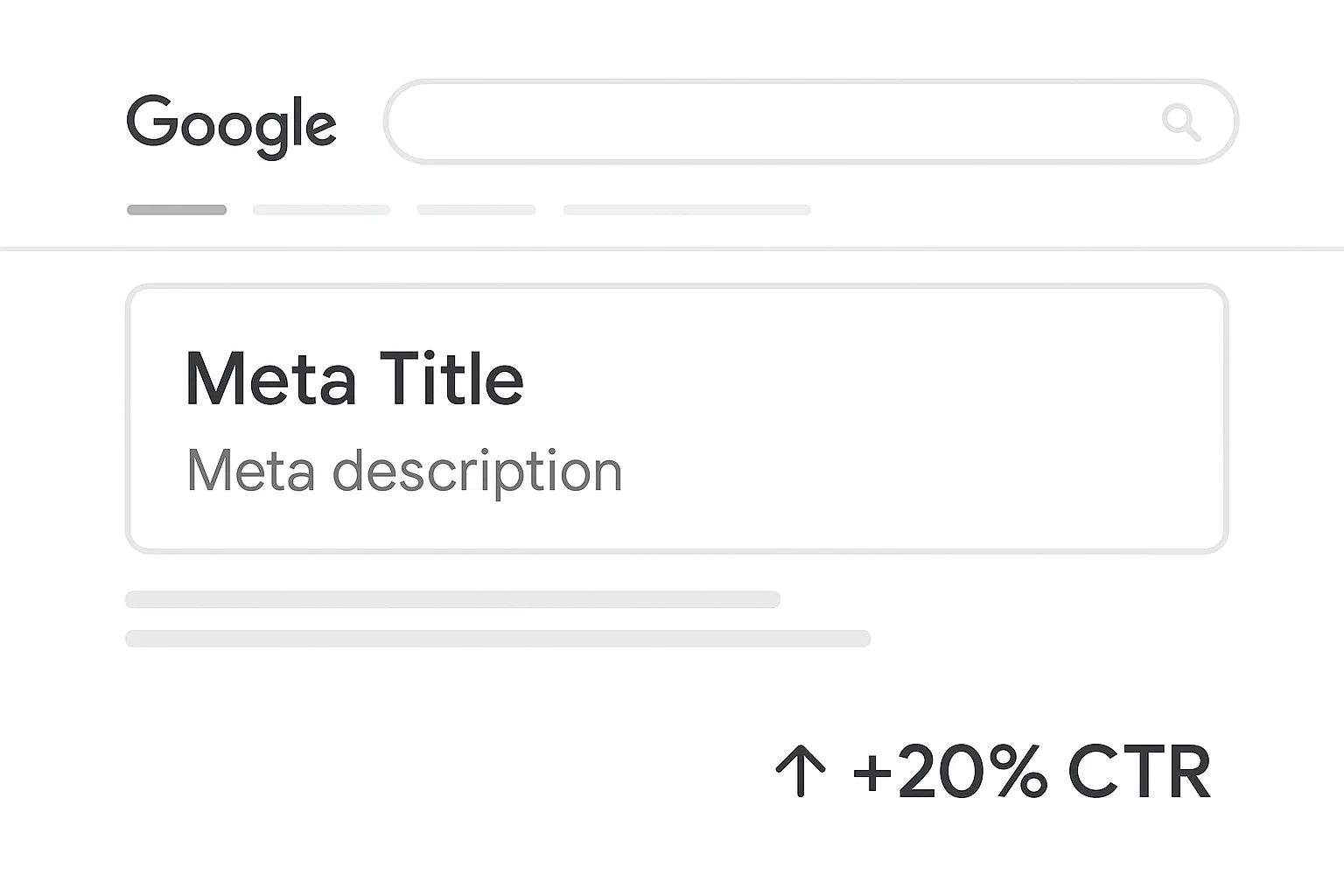
Your title tag and meta description serve as your first impression in search engine results. A well-optimized snippet can dramatically improve your click-through rate—even if you’re ranking slightly lower than a competitor.
If you’re optimizing for keywords like how to use meta tags or SEO services, pairing them with compelling copy in your description increases visibility and user interest.
Influence on Search Engine Understanding & Behavior
Meta tags help Google and other search engines understand what your page is about, determine its relevance, and decide how to index it.
For instance, using a noindex tag on low-value pages or filter variants helps improve crawl efficiency and avoid SEO cannibalization. Combined with canonical tags and structured data, these small elements support better technical SEO hygiene.
To see how these pieces fit together in a real-world setup, check out our detailed on-page SEO checklist, where we walk through meta elements alongside headers, alt text, and schema.
User Experience Across SERPs & Social Shares
Meta tags not only influence rankings but also shape how your content appears when shared on platforms like WhatsApp or LinkedIn. Open Graph and Twitter Card tags extend the utility of your meta title and description into social previews—building stronger branding and consistency.
According to Google’s documentation, optimizing tags like title and description improves both relevance and presentation in search snippets, which directly affects user engagement.
Your competitors might be outranking you for a fixable reason
Most sites lose the majority of their potential traffic to issues that take days, not months, to fix. Our free audit tells you what those are.
No commitment, just a clear picture of where you stand.
How to Use Meta Tags Effectively
Meta tags aren’t just technical fluff—they shape how search engines and users engage with your site. To fully leverage their power, you need to write them with strategy, clarity, and structure in mind. Here’s how to do it right.
Best Practices for Title Tags
The title tag is your headline in search results. It should be:
- Between 50–60 characters (under 580px)
- Include the primary keyword near the beginning
- Feature power or sentiment words for emotional engagement
- Be written in sentence case, not ALL CAPS
Example:
<title>Meta Tags Best Practices for SEO | Skymoon Infotech</title>Avoid:
- Keyword stuffing (e.g., “Meta Tags, Meta Description, Meta SEO”)
- Duplicate titles across pages
- Titles longer than 60 characters
Want more guidance on structuring titles across your website? Review our SEO company page for real-world examples.
Crafting Clickable Meta Descriptions
While not a direct ranking factor, a meta description can dramatically improve CTR by clearly conveying the page’s value.
Tips:
- Keep under 160 characters
- Include your target keyword naturally
- Write a benefit-driven summary or soft CTA like “Learn more” or “Explore tips”
Example:
<meta name="description" content="Learn how to use meta tags to improve your SEO. This guide covers title tags, descriptions, robots tags, and common pitfalls.">Avoid:
- Using the same description site-wide
- Leaving the tag empty (Google will auto-generate one—often poorly)
- Writing vague or generic descriptions like “Learn about meta tags”
Common Mistakes to Avoid with Meta Tags
- Missing tags entirely
Pages without title or meta description tags appear sloppy—and often get misrepresented in SERPs. - Overusing “noindex”
Blocking critical pages like your homepage or service pages by mistake with noindex can wipe out your rankings. - Using outdated tags
Meta keywords (e.g., <meta name=”keywords”>) are obsolete and ignored by search engines. Don’t waste code space. - Title + H1 mismatch
Ensure your <title> and your H1 align in message. They don’t have to be identical, but they should reinforce the same intent.
If you’re wondering how to write meta tags for beginners, our digital marketing blog is packed with examples and breakdowns.
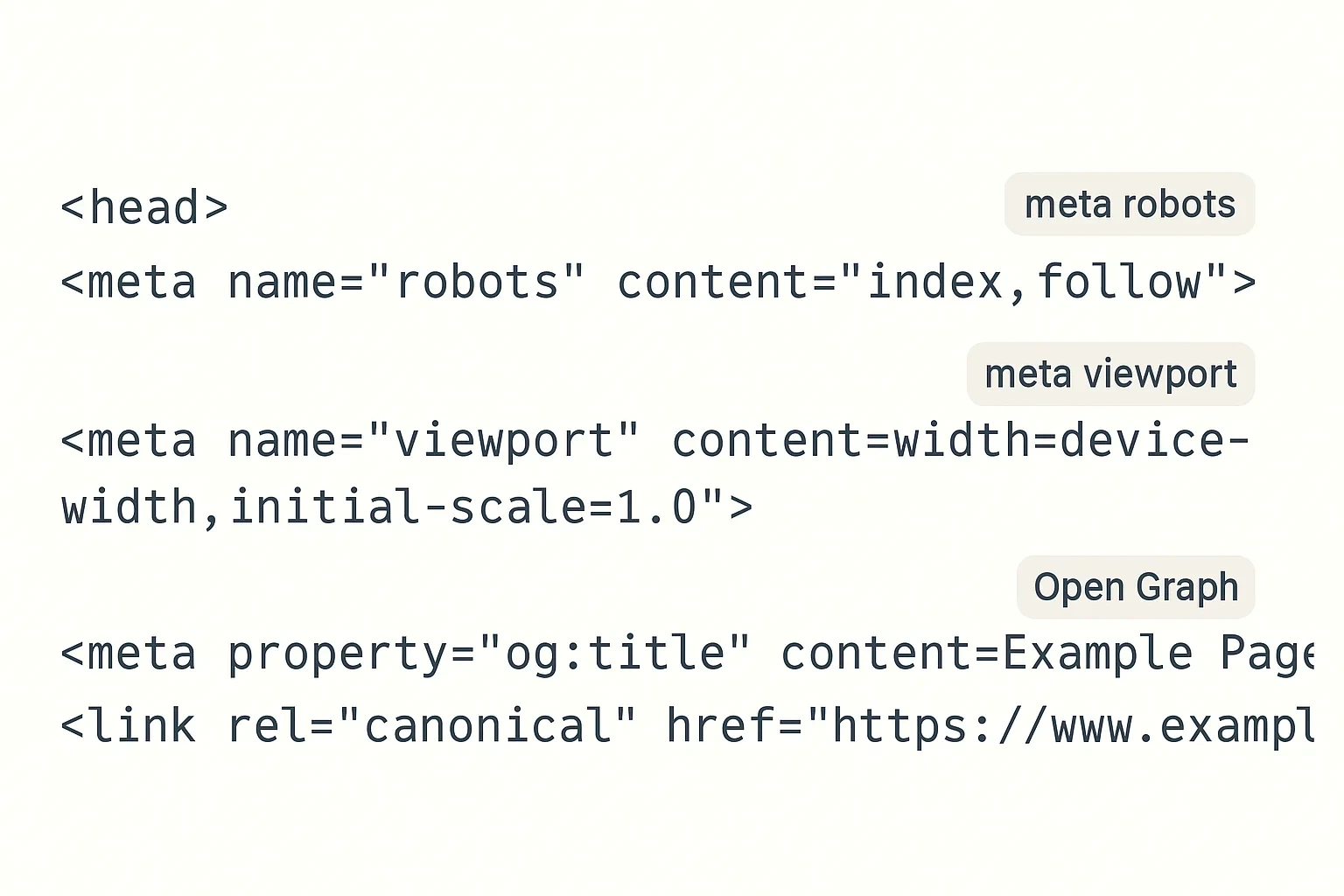
Types of Meta Tags You Should Know About
Beyond the common title and meta description, several other meta tags play a role in SEO, indexing, user experience, and mobile friendliness. Here’s a breakdown of the most important ones, how they function, and when to use them.
Meta Robots Tag
The robots tag gives search engines specific instructions on what to do with your page. You can:
- Allow or disallow indexing (index, noindex)
- Allow or disallow following links (follow, nofollow)
- Prevent content from being archived (noarchive)
- Avoid displaying snippets (nosnippet)
Example:
<meta name="robots" content="index, follow">This is crucial for managing crawl budget and duplicate content.
Learn how to combine robots and canonical tags in our SEO checklist guide.
Viewport Meta Tag (for Mobile Optimization)
The viewport tag helps control how your webpage scales and appears on mobile devices. Without it, your content may display incorrectly on smartphones or tablets.
Recommended usage:
<meta name="viewport" content="width=device-width, initial-scale=1.0">It doesn’t directly affect rankings but does impact bounce rate and mobile usability—two indirect SEO factors.
Charset Tag (Encoding Language)
This tells browsers what character set to use, helping avoid weird symbols or broken characters. Always include this in your HTML head.
Example:
<meta charset="UTF-8">Open Graph & Twitter Card Meta Tags
While technically not part of SEO, these social media meta tags improve how your pages look when shared on Facebook, LinkedIn, or Twitter.
Example:
<meta property="og:title" content="Meta Tags Best Practices – Skymoon Infotech">
<meta property="og:description" content="Learn what meta tags are and how they impact SEO.">
<meta property="og:image" content="https://yourdomain.com/images/meta-tags-guide.jpg">
If you want your blog to stand out in social shares, implementing Open Graph tags is a must.
Canonical Tag
Ready to turn this into an actual growth plan?
Our team builds strategies across SEO, paid advertising, AI search visibility, and website performance, matched to your budget and your goals, not a generic package.
- A real thirty minute call, not a sales pitch
- Recommendations specific to your business
- A short list of what to fix first
Not a traditional “meta” tag, but essential in the <head> section. It tells Google which version of a page is the original, helping to avoid duplicate content penalties.
Example:
<link rel="canonical" href="https://skymooninfotech.com/blogs/meta-tags-seo-guide">To see how these tags integrate into your broader content setup, explore our SEO-friendly web development services.
You can find official Open Graph documentation on Facebook’s developer portal and Twitter Card guidelines.

Meta Tag SEO Checklist – Final Takeaways & Optimization Tips
Use this checklist to ensure every page on your site is fully optimized with essential and effective meta tags.
Essential Meta Tag Checklist
- Title Tag: Under 60 characters, includes primary keyword, unique across pages
- Meta Description: Under 160 characters, persuasive, includes keyword, supports CTR
- Meta Robots: Properly configured (e.g., index, follow) unless intentionally excluded
- Canonical Tag: Added to prevent duplicate content conflicts
- Viewport Tag: For mobile responsiveness (width=device-width, initial-scale=1.0)
- Charset Tag: Ensures proper character encoding (UTF-8)
- Open Graph Tags: Configured for better social sharing preview
- Twitter Card Tags: Set for Twitter previews
- Schema Markup: Use with Article, FAQ, Breadcrumb, and Speakable if relevant
Real-World Tip:
Start by auditing your highest-traffic landing pages. These often have the most to gain from small improvements in CTR or crawlability. Tools like Ahrefs or Screaming Frog can help scan your entire site for missing or duplicate meta tags.
FAQs About Meta Tags and SEO
What are meta tags in SEO?
Meta tags are snippets of HTML in a page’s header that describe the content to search engines and influence how it’s displayed in search results.
Do meta tags still matter for SEO in 2025?
Yes. While not all meta tags directly impact rankings, they strongly influence CTR, UX, indexing, and branding—making them vital for on-page SEO.
How do I know if my meta tags are working?
Monitor performance via Google Search Console—look for improvements in CTR, impressions, and search rankings after optimizing meta tags.
Can I use the same meta description across pages?
No. Every page should have a unique, keyword-rich description that matches the page intent.
How often should I update meta tags?
Review them quarterly or whenever you update your content. Old meta tags can hurt performance if they no longer reflect the page content.
Let's turn this into results for your business.
SEO, paid advertising, AI search visibility, website design, and conversion optimization, all under one roof, all pointed at the same goal: revenue.